
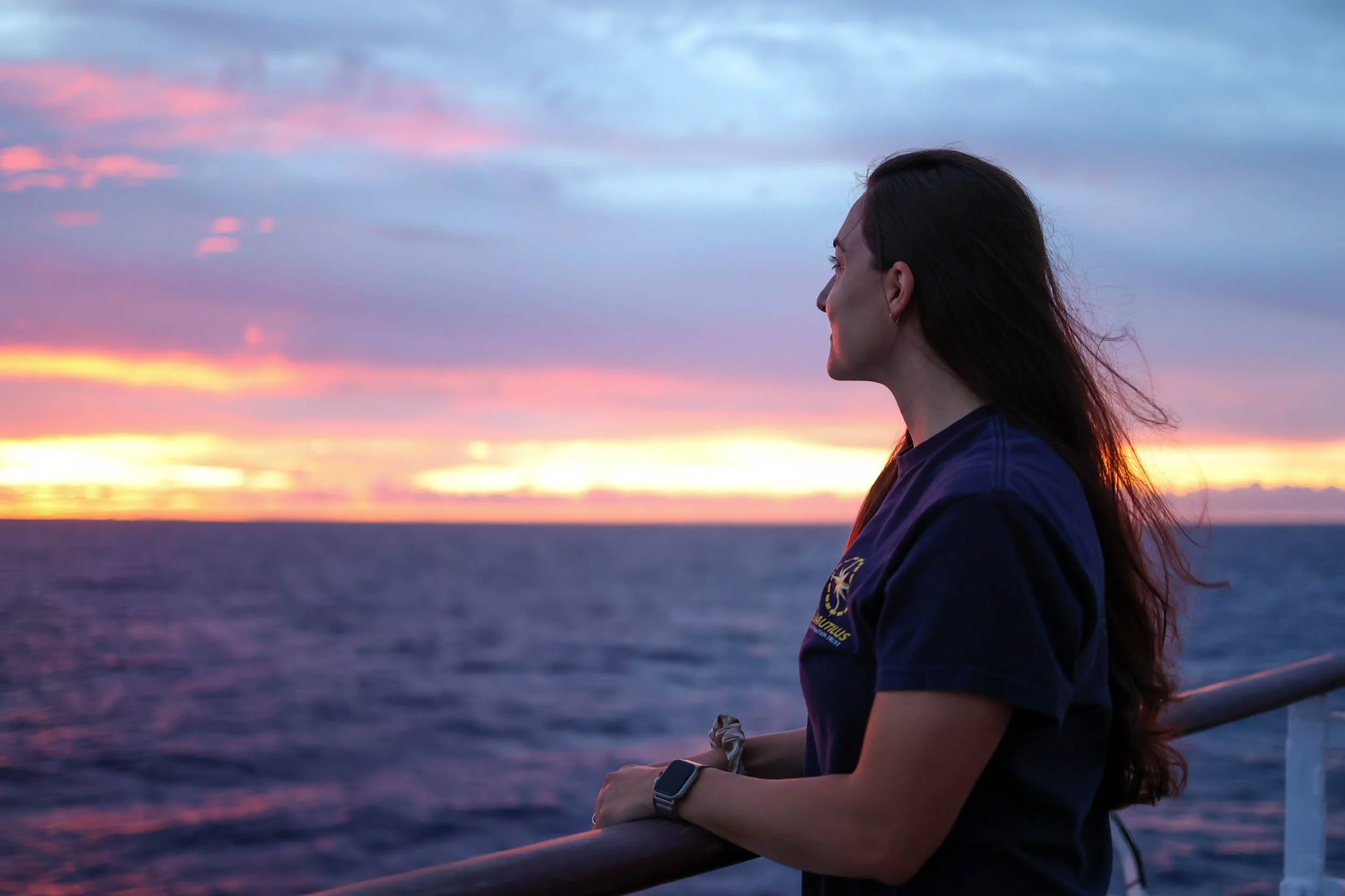
Central Pacific Ocean | 19.2693°N, 180.000°W | June 20th, 2026
Things are going to happen to you. There will always be things that are external, outside of your control, and you have to let those go.
What matters most is internal.
I first met Gaby Espino when we boarded E/V Nautilus in June of 2024. I had worked on Nautilus a dozen times before then, but that particular expedition was my first time going to sea since the sudden and unexpected death of my mom six months earlier. At that time, my mind felt disoriented by the mental chaos of grief. Hanging out with Gaby, and absorbing some of her warmth and steadfast energy, helped to quiet my frenetic thoughts.
During our mapping expedition from Honolulu to British Columbia, I enjoyed chatting with Gaby and learning a little bit about her childhood in Hawai’i and her experiences in the Navy. It wasn’t until a year later, sitting on a beach in Guam, that Gaby told me about the tragic loss of her brother.
Over the past two years, Gaby and I have spent many days at sea together and engaged in many soulful chats about exploring our planet, navigating grief, and living with intention.
Gaby is a professional ocean explorer, a proud veteran, a rock-solid shipmate, and one of the toughest (and friendliest) people I have ever met. I am very honored to feature some of her “old soul” wisdom and powerful perspectives here. Mahalo nui loa my dear friend.
Marley: You were born in El Paso, Texas but your family moved to Hawai’i when you were young. What was it like to move to Oahu and grow up there?
Gaby: I was taught from the beginning that I needed to understand where I was living. I also loved the culture, and I did my best to learn the language. Even though I’m not Hawaiian, I immersed myself as much as I could – I danced hula and learned to speak a little Ōlelo Hawai’i.
The aloha spirit came from my parents. My dad is a Waikiki beach boy, and I learned the ways of the ocean from him. My brother surfed and I paddled. I was a steersman – navigating the canoe, figuring out the currents – you can’t learn those things from books. You have to get out there and learn them from the ocean. Not everybody is willing to learn, but fortunately we did.
Marley: You and your brother were always close. Can you tell me a little bit about your bond?
Gaby: Not all siblings get along, but we were always a team. He was my brother, but he was also almost like a father figure – he took care of me. He protected me. We were both very active, so we did a lot together in that aspect. In high school, he convinced me to join the Junior ROTC program. At the time, I thought I’ll just try it for a year. I didn’t really want to do it – but he was my platoon commander, and I ended up loving it so much.
When we were apart, we were always calling each other. In college, he would write letters to me! What 22-year-old kid writes letters to his little sister??
Marley: Who joined the Navy first? You or your brother?
Gaby: I joined first – I entered the Naval Academy in 2010. My brother enlisted two years later. He was very fortunate because he was stationed in Hawai’i the whole time as an active reserve. After boot camp, he was able to go straight back to Hawaii and live there. I joined the Navy to see the world, but I got stationed in Oklahoma.
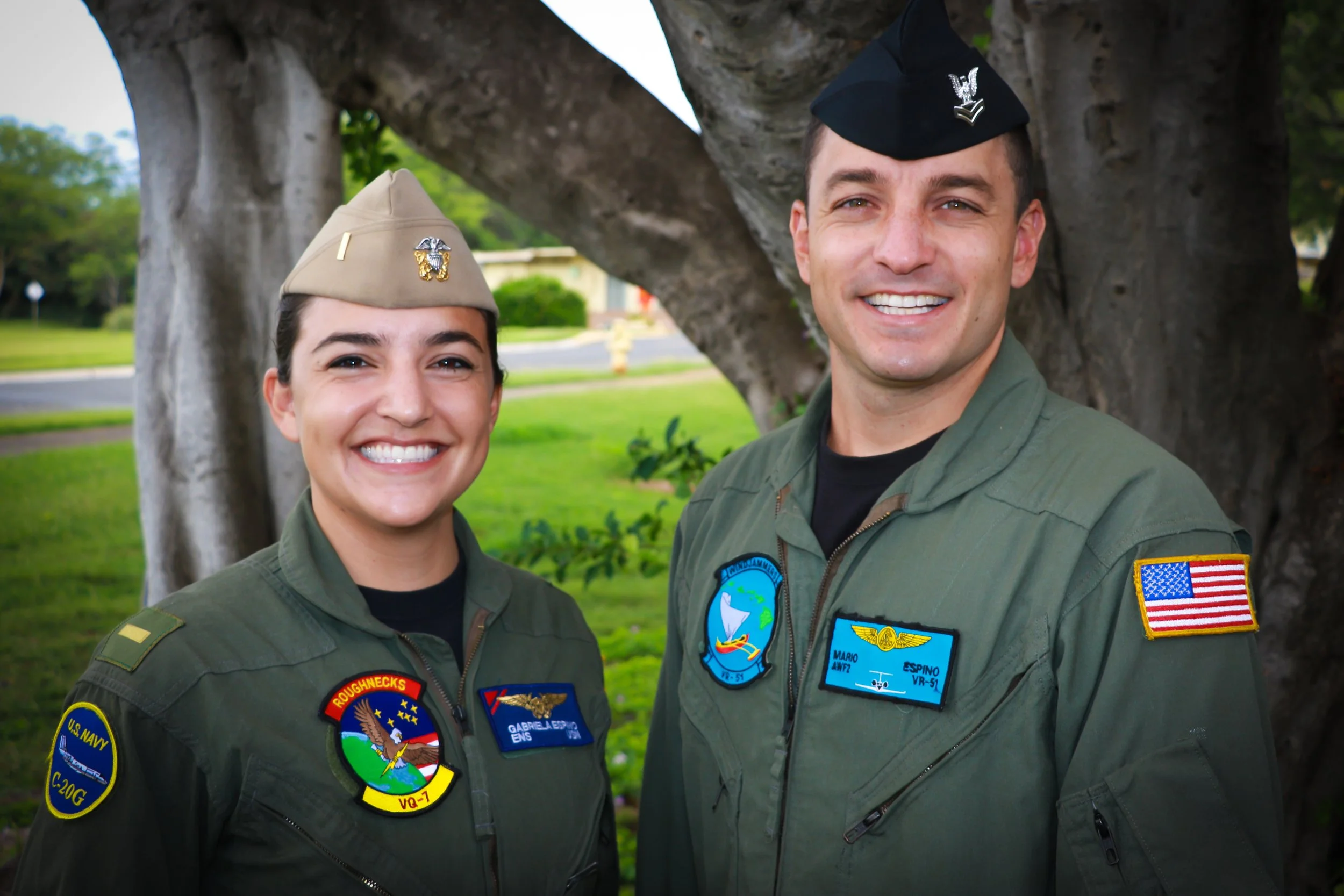
All-star siblings: During a trip home to Hawai’i in 2016, Gaby and Mario donned their flights suits and posed for a photo in Kaneohe Bay, where Mario’s squadron was based. Photo by Riana Espino.
Marley: The work you did for the Navy blows my mind. Can you describe the aircraft you worked on and your position?
Gaby: I was a communications officer aboard the E-6B Mercury – we called it the Doomsday Plane. Our training involved understanding what would happen during nuclear war and the effects of it. My job was to be able to get the aircraft somewhere safely and simultaneously communicate with the president and the Pentagon.
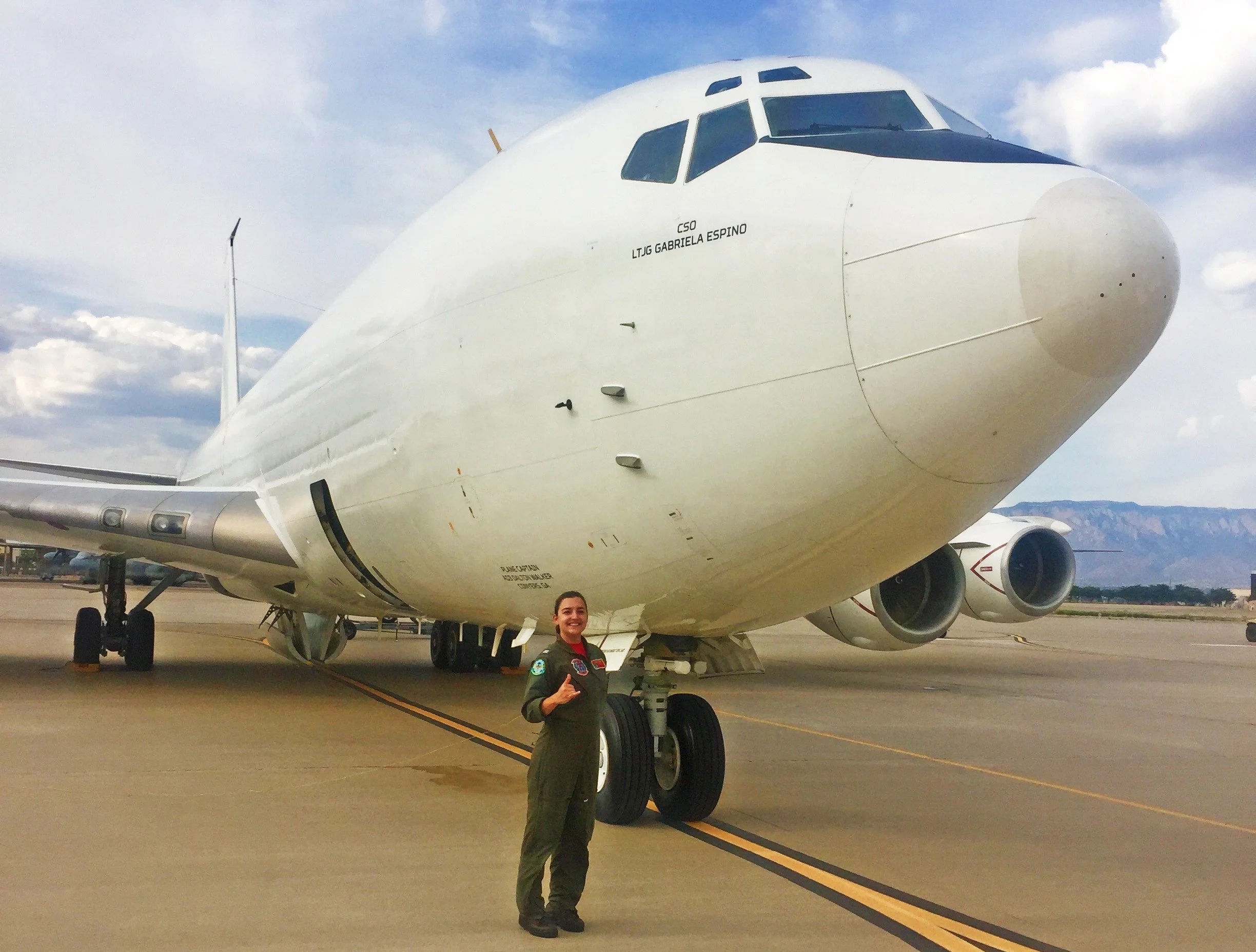
No small feat: Gaby stands in front of the E-6B Mercury. Her name was put on the aircraft when she became a Combat Systems Officer and Mission Commander,
We ran through all kinds of dark scenarios. Sometimes we put on CBR (chemical, biological, radioactive) gear. Other times we practiced setting up make shift command centers if others were taken out from a nuclear attack.
It was all really depressing. I loved flying and I loved my crew, but I wanted to be helping the planet. I wanted to do something beneficial for our society, rather than preparing for the worst possible scenario. That was a big part of why I transitioned from working on specialized Navy aircraft to oceanographic research vessels.
Marley: What were the biggest lessons or take-aways from your time in the Navy?
Gaby: In the navy, you’re put in stressful situations, and you have to juggle a lot – but that’s what we’re trained for. In heightened, stressful environments, I know how to stay calm and not react as quickly as a person typically would. The Navy also teaches you how to deal with people – you fly with all sorts of people, and you learn how to live with them, which is very unique. We know how to roll with the punches and work well with people that we just met.
Those aptitudes definitely carry over to the work here on the Nautilus. If something goes wrong, or I have to work in the middle of the night, it’s fine. I react calmly and go with the flow. It’s easy for me to bunk with random people and to communicate effectively. I love hearing everyone’s stories.
Marley: In all the conversations we’ve had, I have always been struck by your resilience. Have you always been a tenacious person? Where does your intrinsic drive and toughness come from?
Gaby: I think it’s in my blood. The women in my family have always been very driven. But I think it’s something that has developed over time as well. You change as a person as you go through life. When I was young, I was tough because I had an older brother and I used to hang around his crew. I was a tomboy. I think that helped me develop a strong mentality that served me well in the military. When I was at the Academy, it was only 16% women. It was mostly guys and I was fine with that. I never really saw any difference in my mind – I just wanted to keep up with whoever was in front me, whether they were a man or a woman didn’t matter.
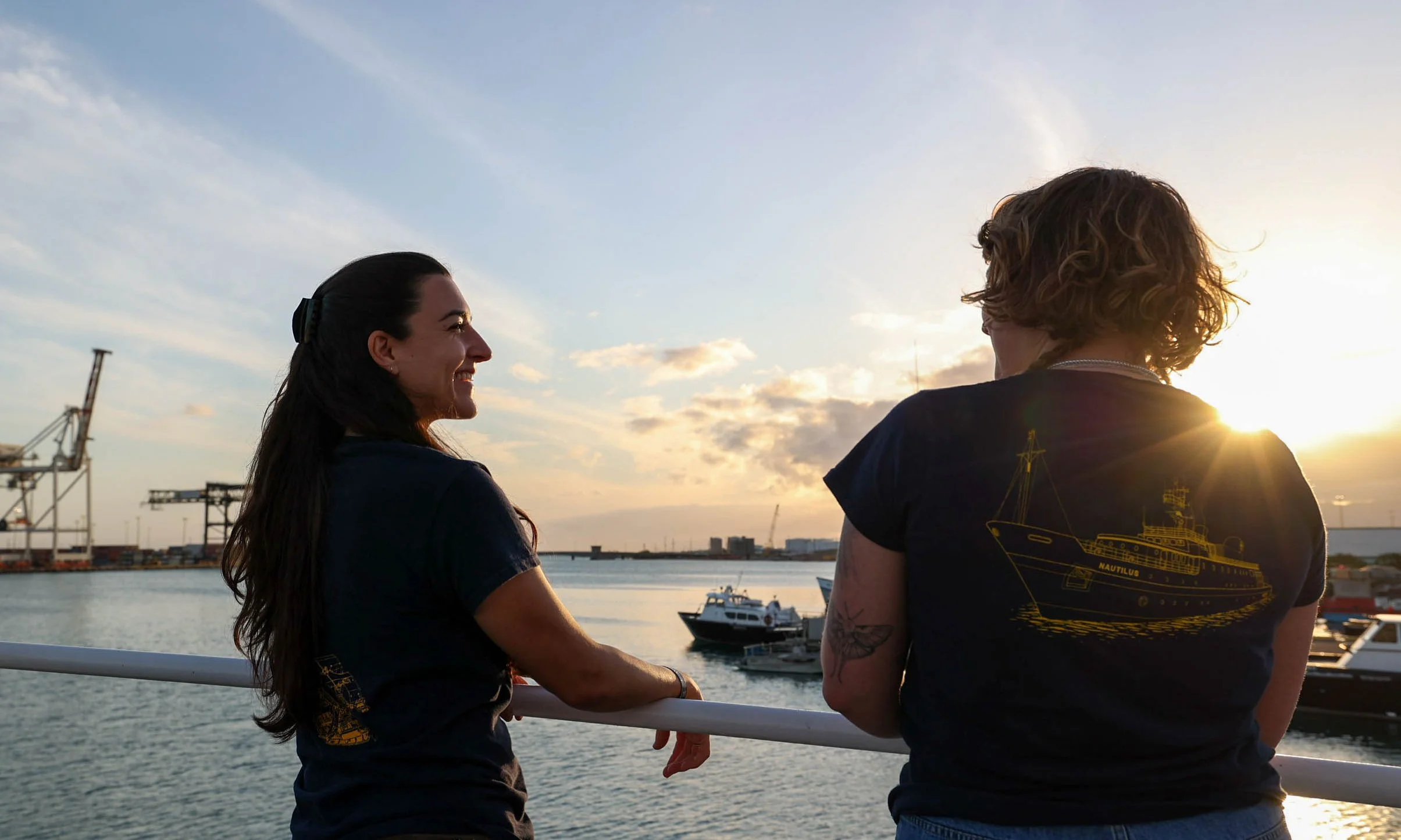
Honolulu to Canada: I took this photo of Gaby chatting with Isabella Monaco (another amazing shipmate!) the evening before we departed port on our first expedition together (NA160) in 2024.
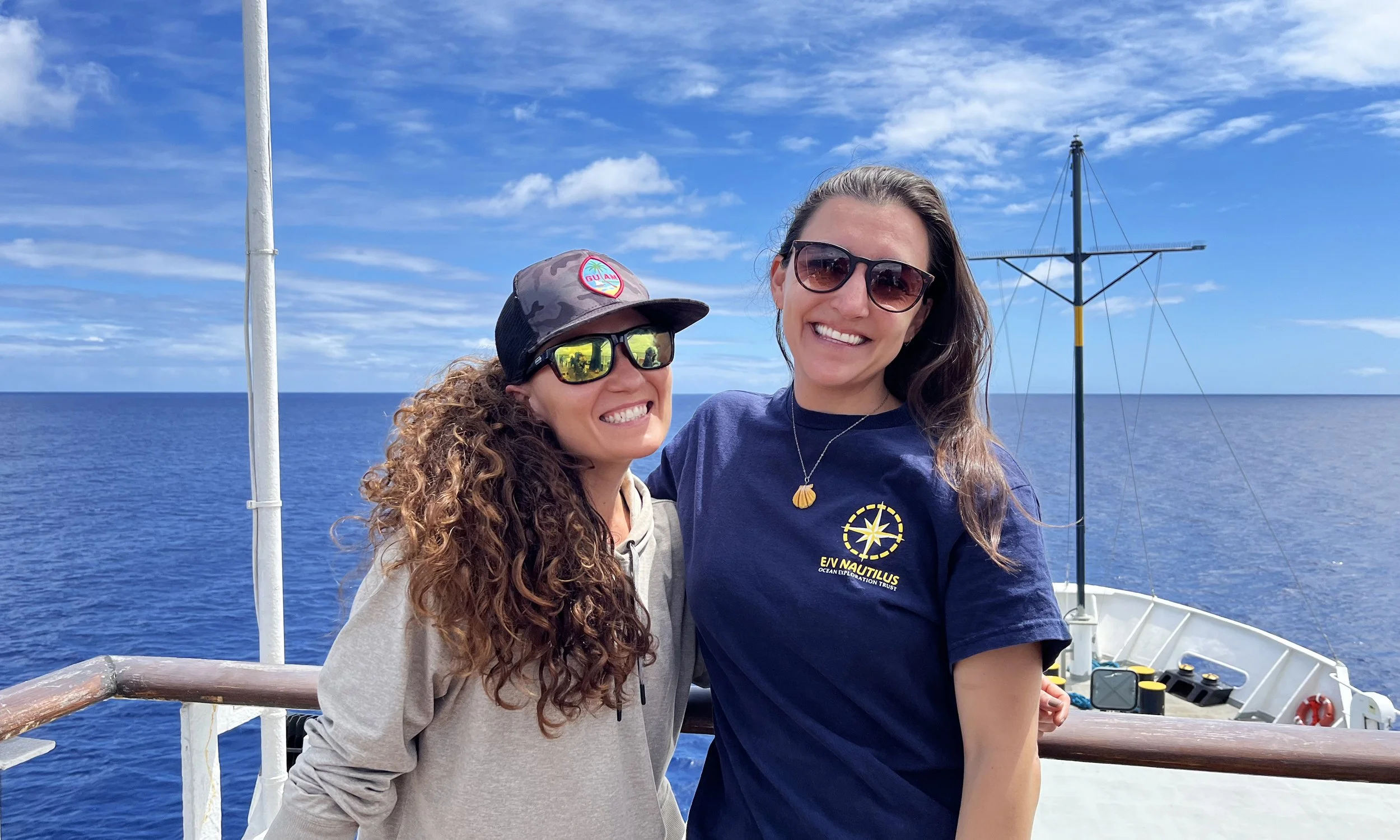
Honolulu to Guam: Always a pleasure to go to sea with this inspiring human! As we sailed out of Honolulu for the start of NA178, we enjoyed calm seas and perfect weather.
Marley: Do you think it’s possible to excel without being hard on yourself? This is something I’ve always wondered about when it comes to high-achieving people. We can’t live our lives constantly berating ourselves, yet we also want to be the best we can be. What is the balance?
Gaby: I think it’s something we always have in the back of our minds. You can be hard on yourself, but you have to give yourself some grace as well. Focus on the things that are within your control. If there’s something that you want to improve but it’s outside of your control, you have to let it go. Focus on what’s on the inside – that’s where the Stoic philosophy comes in.
Marley: Tell me more about your relationship with Stoic philosophy.
Gaby: When Mario died, my whole worldview shattered. I went to counseling. I thought my brother was going to be right there, by my side, for the rest of my life. It’s a disorienting feeling. I lost my course.
The counselor I saw at that time said, “you’re very Stoic.” That’s when I decided to look into Stoic philosophy more. Thankfully, my partner Alex has studied Stoicism, and practices it in his life.
That belief system has helped me a lot. Things are going to happen to you. There will always be things that are external, outside of your control, and you have to let those go. What matters most is internal. Your character, judgement, your impressions, your reactions to events that happen. That’s something that I’m constantly working on.
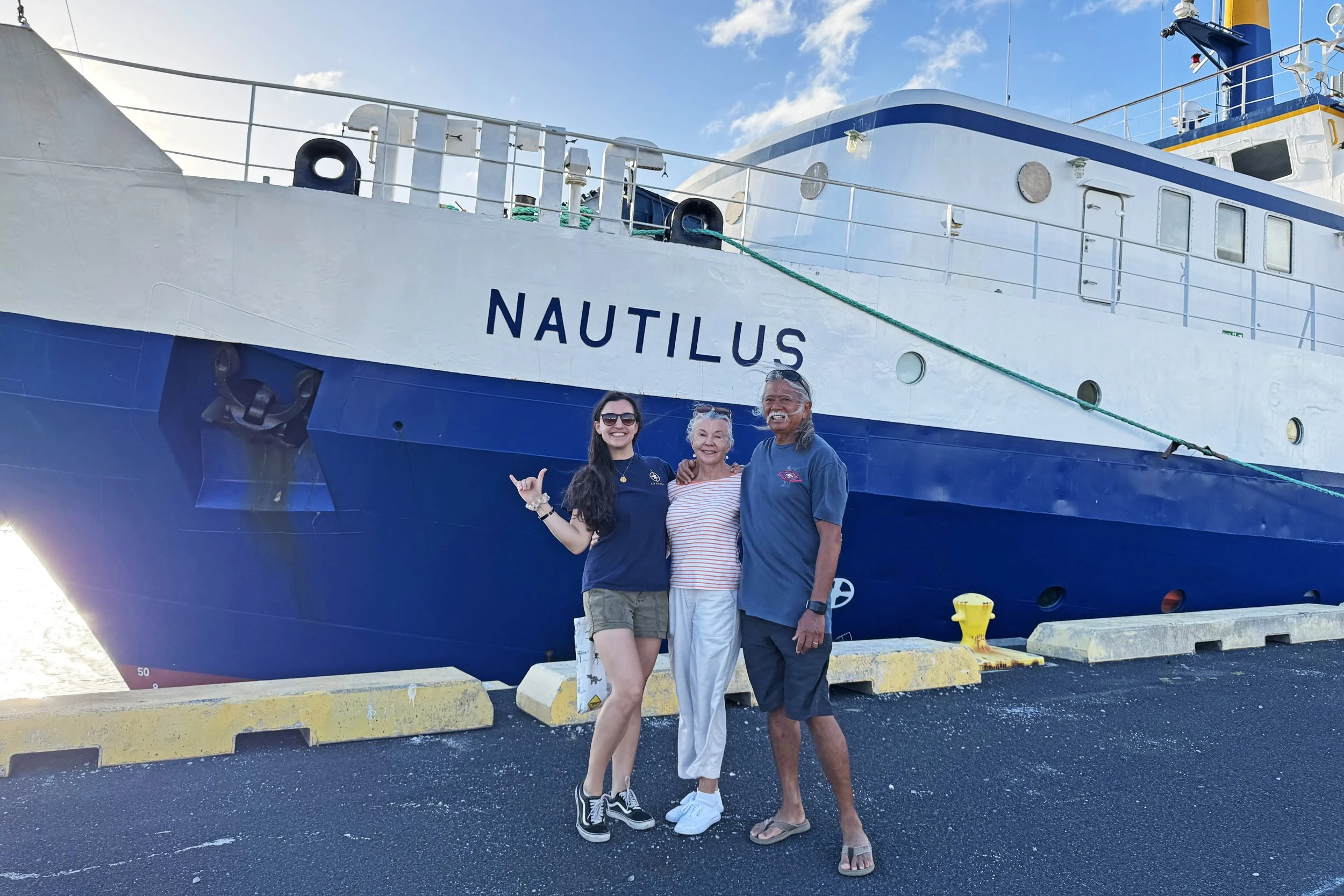
Special time with the ‘ohana: Before setting sail for NA178, Gaby had the opportunity to give her parents a tour of Nautilus (and I got to meet them!)
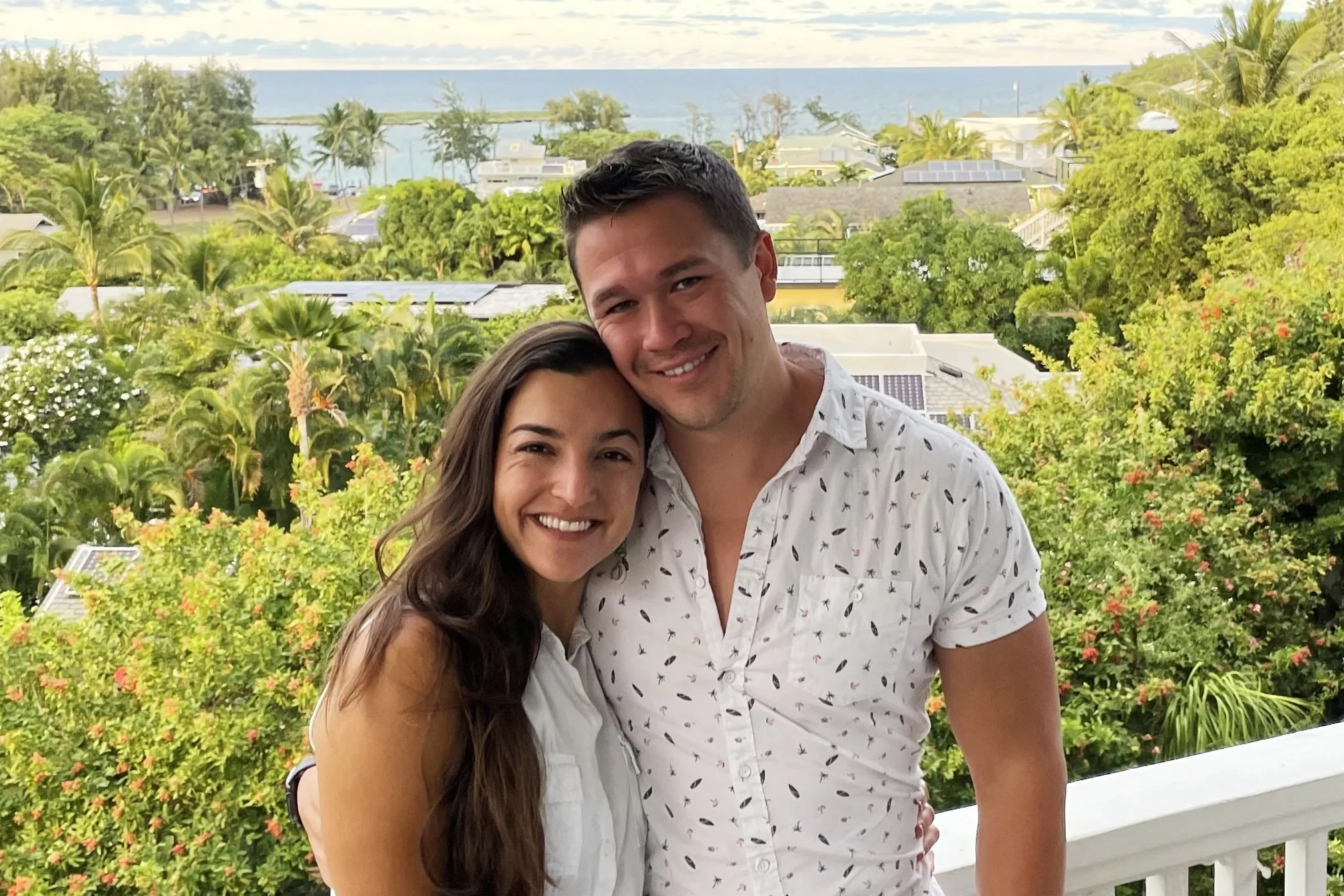
Chosen family: Gaby and her partner Alex pose for a photo in Kailua. “He has helped me through so much and has brought so much joy into my life,” Gaby says.
While we’ve been here on the boat, I’ve been going over The Discourses. It’s a tough read – it’s dense and slow – but it’s very helpful. Each chapter contains a huge lesson. I combine those lessons with my Christian beliefs which are very in line. I think we are meant to be able to deal with obstacles, to handle them. I believe my brother’s passing is the hardest obstacle I will go through, but I want to make it into something that will help me grow as a person.
Marley: It takes a lot of discipline to hold onto that belief system. I truly mean it when I say this: you are unlike anyone I have ever met. Have you ever been called an old soul?
Gaby (laughing): Yes! When I was growing up my mom used to say I was a little old woman. But I do come from very strong women – and I know that strength has been carried down through my genes. We complain about things these days, but the things they went through back then… my great-great grandmother had 20 kids and many of them died before the age of five.
I think it’s really important to be grateful for what we have – I try to work on gratitude each day. Here on the ship, I journal every day. And I always include a high, and a low, and something I can work on. Alex is my sounding board. When I’m gone, he also does a high and low of the day and that’s what we share with each other. It can get a bit repetitive each day, out here – or even back home. It’s nice to view things from a slightly different perspective.
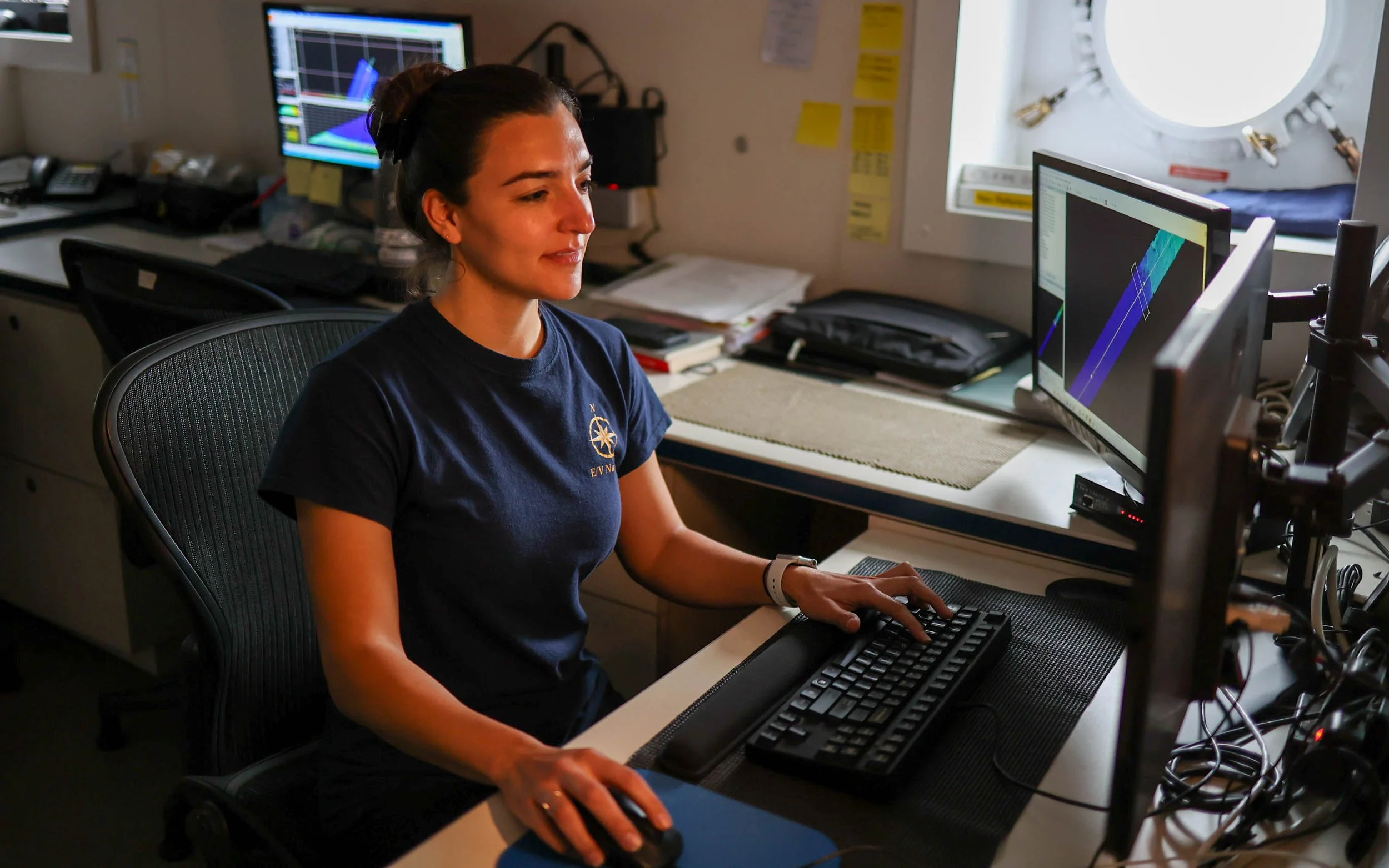
Another perspective: “When we look at a globe, we often take for granted how much work has gone into knowing what our planet looks like,” Gaby says. “And we are just now starting to really see what is underneath the ocean. It’s still a major frontier.”
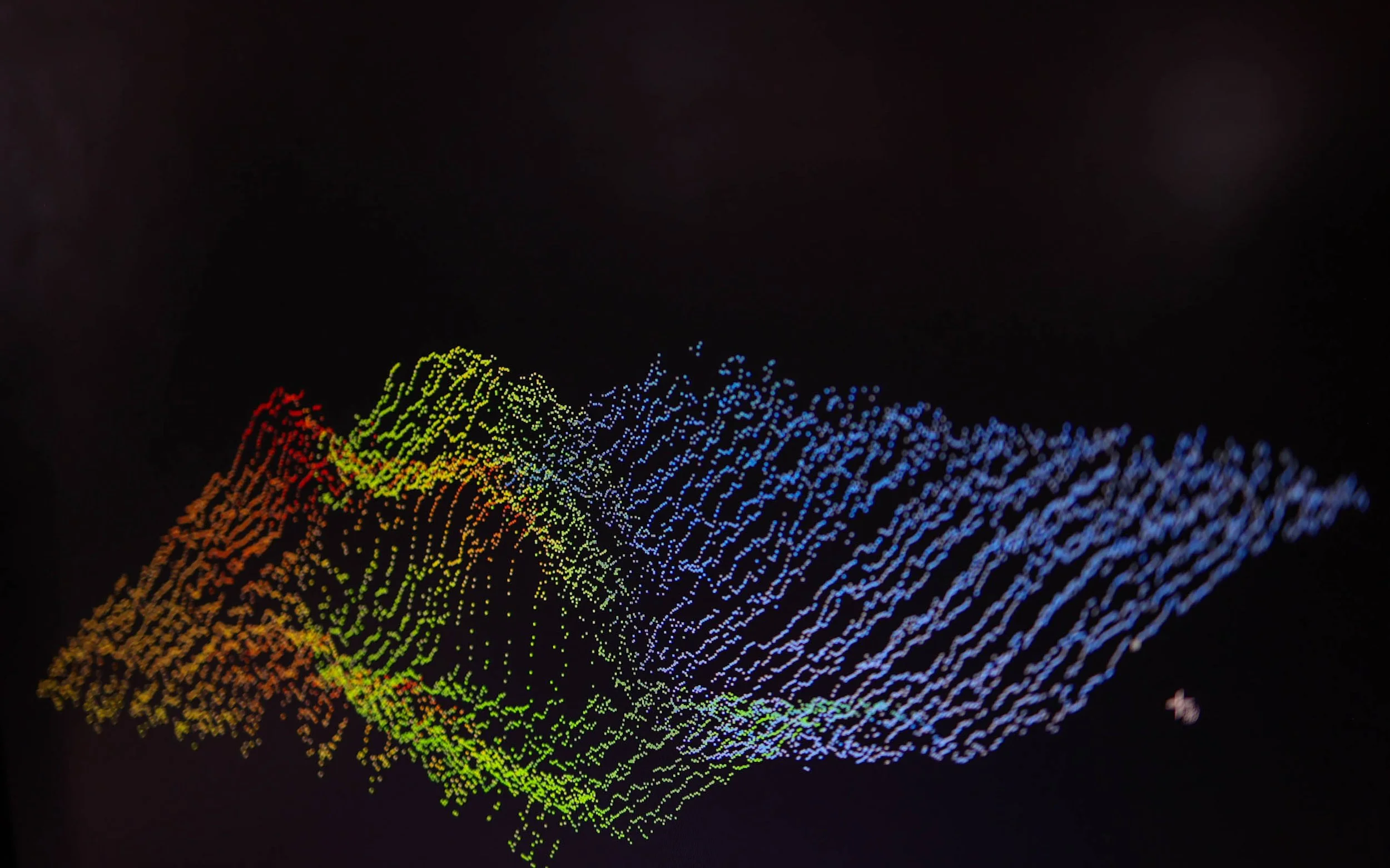
Seeing the seafloor: This image is one example of bathymetric data gathered on Nautilus. Seafloor mappers like Gaby track the quality of data as it comes in and make adjustments to the multibeam sonar as needed.
Marley: You and I have talked a lot about life at home versus life at sea. Out here, you’re helping to create maps for parts of our planet that no one has ever seen – literally working on earth’s final frontier. At home, you’re helping your partner raise some good kids. You’re a professional explorer and you’re also a bonus mom. How do you embody those different identities?
Gaby: It’s like living in two different worlds. I wish I could share this world with Alex and the kids. At least they can follow along online, and we can occasionally show them stuff in the Control Van. They’re such good people. They also fully support me. If I told them that I had to go out to sea for a few months, they would understand. Or if I had to leave them to do anything that I’m passionate about, they would 100% be on my side.
Marley: That’s so wonderful – and so important! I think there’s a societal assumption that being a good parent (or partner) means being physically present all the time, but I don’t think that’s true. What do you think?
Gaby: I completely agree. It’s important to set a good example. We have to show them it’s possible to go out in the world and do something unique. In their minds, it might seem a little scary, so we have to show them how to be brave.
Marley: They are lucky to have you in their lives. And I think you are the embodiment of bravery, especially in the wake of losing your brother. It’s been special to get to know Mario through your memories of him – it sounds like he had such an enormous appetite for life. What did he teach you? And what have you learned since his passing?
Gaby: After my brother passed, I gained more confidence in who I am and what I want. It was a big step for me to leave the military and not everyone was supportive of my decision at the time. If I stayed in, I would have done very well, but I knew I wanted something different. Losing Mario gave me the clarity and resolve to take that step. I want to be able to live the life I want – not just for me, but for my brother as well.
He always pushed me to do more, to be better, to excel in more things. If I was falling behind or didn’t want to do something, he would be the one to motivate me. He was also the optimistic one – like an annoying amount of optimism. When I was being a moody teenager, he would tell me to go jump in the ocean. As an adult, I still think about that when I’m feeling down. Go jump in the ocean right now!
On our last run together, Mario was talking about aloha. I had a gray cloud over me about something, and he was telling me to step out of it. There’s no need to be upset, he said. Look around us! He used the example of driving up to an intersection – when you get to a four-way stop, throw up a shaka. Let the other people go first. Embody aloha.
That last conversation will always motivate me to be more positive and to carry with me, in everything I do, the aloha spirit.
To learn more about Gaby and her professional experience, check out the following links:
Nautilus Live | Gabriela Espino