
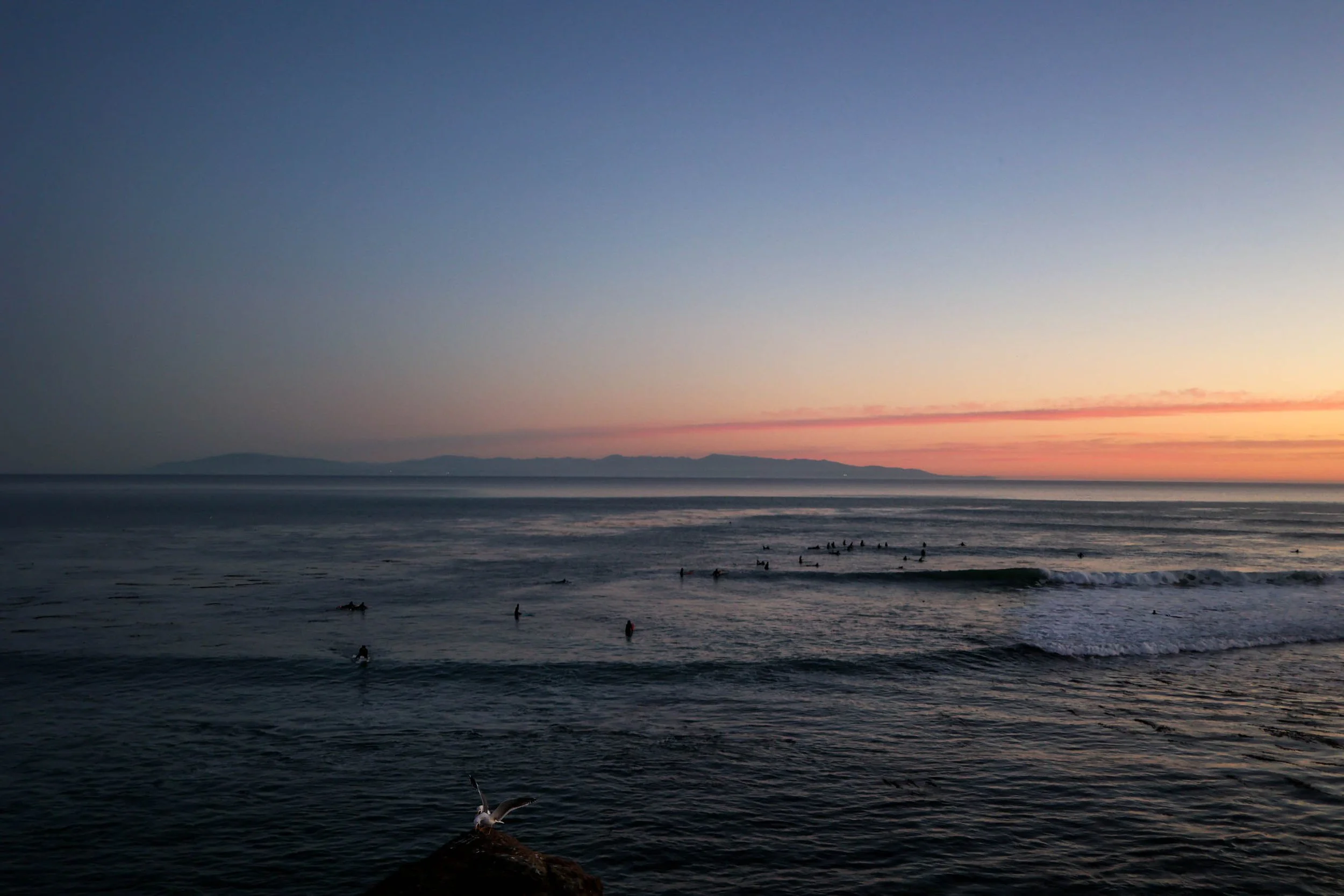
January 16, 2026 | 36.5973° N, 121.8978° W | Monterey and Santa Cruz, California
Nothing makes us feel more deeply connected than when we are engaged in a healthy balance of thoughtful speaking and hardcore listening.
— Esther Perel
Strolling along the central California coast often makes me feel as though I’ve entered a portal to another time, or at least a different season. Even though it’s early January, this picturesque part of Santa Cruz exudes endless summer vibes. Cotton-candy colors streak across the horizon while dozens of surfers bob in the waves below.
As Shawnee Traylor and I walk along West Cliff Drive, I take a deep breath and try to calm my frenetic mind. The work I did today felt a bit like the first time I ran a marathon — special, fulfilling, a big accomplishment — and exhausting. It was my first time hosting a professional development workshop for a group of postdocs, at the preeminent Monterey Bay Aquarium Research Institute (MBARI). I mentally run through what worked well and what didn’t work so well. My thoughts circulate around some of the poignant questions the participants raised and how I wish I had scheduled more time for Q&A and discussion.
But focusing on my perceived short-comings and imperfections, especially when I’m physically tired and mentally drained, is not helpful. I need to shift out of self-assessment mode. There will be time to critique my work and seek feedback later. Right now, I want to enjoy this moment: walking alongside a new friend, breathing in the fresh, salty Pacific breeze, and reveling in the fact that I get to spend time in this beautiful corner of California.
Shawnee stares at the late evening light bouncing off the water below and says, “it will be hard to leave this place.” She still has a little over a year left in her postdoctoral appointment at MBARI, but she knows the time will pass quickly.
“Just enjoy it as much as you can while you’re here,” I say, sounding like a cliché. I need to take my own damn advice. Get out of your head. Be here now.
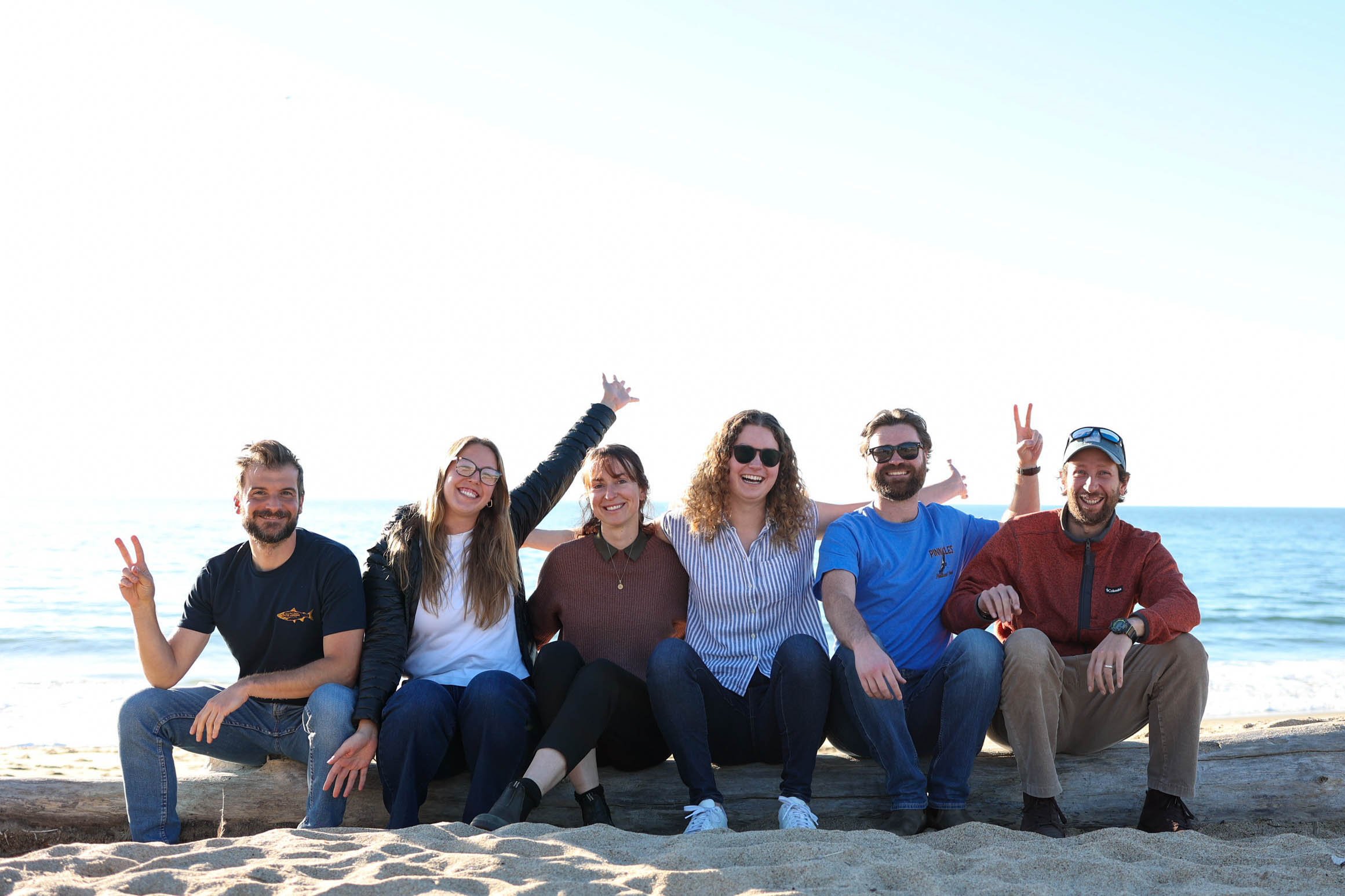
What a crew: a few of the postdocs who participated in my workshop gather for a quick group photo on the beach.
During my introductory presentation this morning, I shared several pivotal moments from my career, and Shawnee realized that she and I have almost crossed paths multiple times in the past few years. We both worked on the NASA EXPORTS expedition in 2021 (same time, same place, different ships), she and I were supposed to be on the same expedition in 2022, and we have several colleagues in common at the Woods Hole Oceanographic Institution (WHOI).
Shawnee and I officially met back in October, after my seminar at MBARI, but it feels like we’ve known each other for much longer. As we meander around the cliffs, occasionally pausing to snap a photo, or listen to the music from the nearby drum circle, we talk. And talk. Partners, careers, passions — no subject is off limits — but Shawnee tosses out a question I don’t see coming.
“Why did you go to journalism school?”
It was one of the most pivotal decisions of my life, but I haven’t been asked (or even thought about) it in two decades.
“I knew I wanted to be a writer and a photographer, but I also wanted to make a living,” I say, recalling my young, driven 18-year-old self and how the UNC School of Journalism seemed to hold the keys to my future. I tell Shawnee that I briefly considered majoring in English, but journalism seemed like a more viable, pragmatic option for becoming a professional storyteller.
“But why did you want to be a storyteller?”
Being asked that question feels akin to asking a fish why it lives in water.
“I started writing when I was seven-years-old,” I say. “I guess it’s always been a part of who I am and how I process the world around me.”
“But why?” Shawnee is unapologetically persistent. “What inspired you to start writing when you were young?”
Finding the energy to really consider this type of question after a long day is an exercise in mental fortitude. It’s a good thing Shawnee is such a kindred spirit. If someone else was trying to pry into my mind in this way, I might shrug them off or change the subject. Instead, I lean in. I begin to tell Shawnee about my childhood and my dear mom.
Shawnee listens intently. By the time I finish telling her about Mama Lide’s untimely passing, I can sense a deep well of empathy and compassion emanating from her. What started as a conversation about career paths evolves into a heart-to-heart discussion about navigating the deep trenches of grief, honoring the people we love, and embracing the ephemeral nature of our existence.
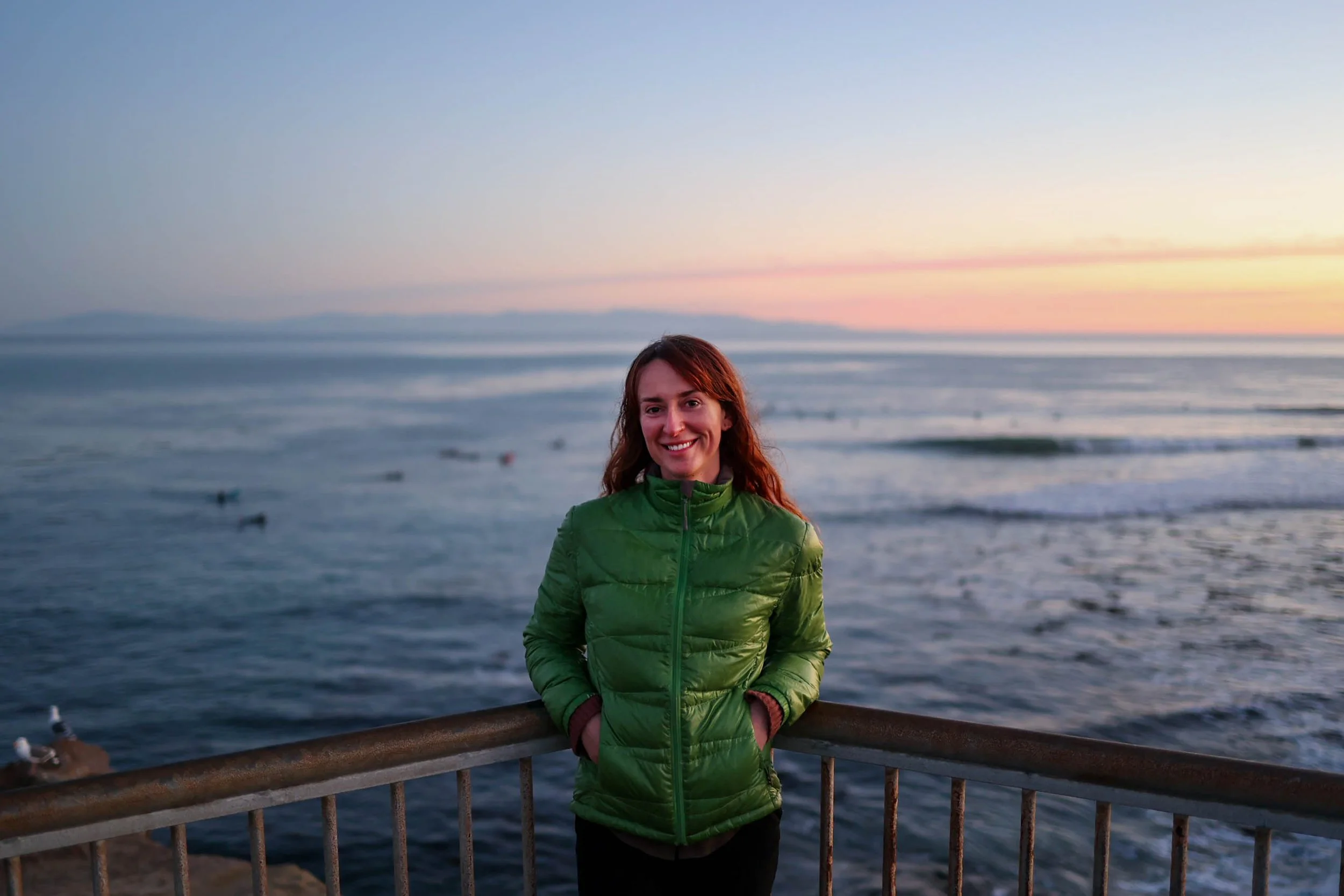
Soul sister: Shawnee Traylor poses for a quick photo during our sunset stroll.
After an hour of walking and talking, we end up at Lúpulo Craft Beer House. Over cold brews and a fresh hummus plate, we continue to ask each other about life and death and where we look for meaning in our lives.
Shawnee and I have already talked about our decisions to not have children — a choice I find to be both wildly liberating and fundamentally grounding. Knowing that we will never be mothers creates a solid foundation on which we can build full lives that look different from many others. Since we won’t have kids, we consider our potential legacies. Where should our money and resources go after we’re gone? And where should we invest our energy while we’re still here? I tell Shawnee about my desire to write a book (or multiple books) and she tells me more about the intersection of her goals: integrating science, outdoor recreation, and personal empowerment.
This type of conversation doesn’t happen every day, especially with a new colleague. While I often think about my choices and ambitions, I rarely have the opportunity to voice those thoughts. I delight in listening to Shawnee’s perspectives and experiences, but as she continues to ask poignant questions, I realize that hearing my own thoughts spoken out loud has its own value.
When I set my empty beer glass down on the picnic table, Shawnee looks directly at me. “Okay — can I ask you a morbid question?”
I laugh because we’ve spent a good chunk of the evening discussing dark and heavy stuff. An hour ago, I was recounting some of the hardest moments of my life. At this point, I don’t think Shawnee needs permission to ask me anything.
“Of course you can!”
“What do you want to have happen to your body after you die?”
I don’t have to think hard about this one. “Whatever is most environmentally friendly,” I say immediately. “Or just donate my body to science.”
Hours later, after dropping Shawnee off at her place in Santa Cruz, and driving back to Monterey, I collapse onto the bed in my hotel room — happy and utterly exhausted. My brain is too depleted to write about the day, so I curl up to read a few pages of My Friends by Feredrik Backman. The following passage makes me smile, as I think of the life-affirming discussions that Shawnee and I had this evening.
“Look at the sun, do you get how crazy it is that it rises every morning? Do you get that? How crazy it is that we are here?” Then Fish had growled and howled and made faces at Louisa to show insane it was that a human being could do all that, how impossible a body is. “Isn’t it like, totally unbelievable that we even exist? So it won’t be a tragedy when we don’t exist anymore! It’s just cool, really cool, that we happened at all.”
The next morning, I meet Cassidy Beach at the Powerplant Coffee Shop in Moss Landing. Like Shawnee, Cassidy attended my talk at MBARI back in October and introduced herself afterwards. As soon as she started telling me about her work and her background, I could see we had a lot professional and personal interests in common.
Now, Cassidy asks about my recent expedition in Antarctica, but I’m more curious to hear about her Science Communication Program at UC Santa Cruz.
She tells me about the fast-paced program (crammed into nine months), the heavy workload, and the stress that comes with perfectionism. Listening to her experiences brings back visceral memories of my final year in the journalism school at UNC. I remember all of it so clearly — struggling to meet deadlines, constantly questioning whether my work was good enough, and feeling like my classmates had it all figured out while I was floundering.
“Are you feeling burnt out?” I ask.
“I was feeling a bit burnt out at the end of the last quarter,” she says, exhaling a long breath. Then she tells me about having some time off for the holidays, and how the assignments and projects for this quarter are going well so far.
I’ve only known Cassidy a short time, but I can see her passion, determination, and drive so clearly. I tell her what I wish someone had told me back in 2010 — don’t be so hard on yourself. The quality of one class assignment does not directly correlate with your ability to be a good storyteller. Focus on gaining the skills and experience — you will have plenty of time to practice and refine your skills after school. I tell her to read this letter I wrote to my younger self.
“I feel you on the perfectionism stuff,” I say. “But trust me — done is better than perfect.”
Cassidy asks questions that I never would have thought to ask a decade ago: Do you feel like you’re missing out on stuff when you’re gone all the time? How do you maintain your friendships and relationships?
I take a sip of coffee and try to gather my thoughts.
“I’m lucky to have such good friends — and a very, very patient and supportive partner.” I explain how my people understand that my work is defined by curiosity, adventure, and a constantly shifting, unpredictable schedule. How they gracefully accept my last-minute change-of-plans because I was just offered another expedition gig. I also tell her about some of the friendship rituals I’ve cultivated over the years: sending postcards from every port I sail out of, scheduling phone calls when I’m away and dinner dates when I’m home, gifting books about science and the natural world to my friends’ kids.
I ask Cassidy what she enjoys reading, and we start discussing books written by intrepid women who have pursued untraditional career paths. I mention some of my favorites, like No one Tells you This by Glynnis MacNicol and West with the Night by Beryl Markham. We discuss the tenacity of women like them (and like us), the mental fortitude and resilience required to forge your own path, to design a life that feels fundamentally different from everyone around you.
“I was scared when I quit my job at the beginning of 2018,” I say. “I had no idea how to start a business — but I figured it out.”
Which isn’t quite accurate. I’m still figuring it out. There are plenty of days where I question myself and I feel like an idiot. I’ve had to accept that I will be figuring it out for the rest of my life.
But I tell Cassidy this simple truth: “It’s the most empowering thing I have ever done.”
She nods and says, “it’s affirming to hear that. It feels like everyone around me is content to spend the rest of their careers in a cubicle. Your perspective is really refreshing.”
I find Cassidy’s curiosity and pointed questions refreshing as well. When I was in my early 20’s, I did not have the direction or intention that this young woman possesses. I marvel at her maturity and her awareness of the challenges that lay ahead. It is not easy to deliberately choose a harder path — but I know she can (and will) navigate all the ups and downs.
Another coffee shop. Another meeting with new colleagues. This time I’m at BookWorks, a lovely bookstore and coffee shop in Pacific Grove. I order an iced coffee and shortly after I sit down at a small round table, Liane Bauer walks over and says “hey, are you Marley?”
Earlier this week, I received an email from Liane, seeking advice about hosting a science communication intern as part of the NOAA Hollings Scholar program. I think she expected me to send a few links or offer some general pointers. Instead, I told Liane I was coming to town and that if she happened to be free this weekend, we should meet up.
Fresh from the ocean, Liane effuses energy. She tells me about her late night out with friends and her early morning of diving. I immediately feel like I’m chatting with an old friend.
Liane’s colleague, Rosemary Kosaka, joins us a few minutes later. “I watched the recording of your talk at MBARI and it was great,” she says kindly. “But I’m so curious — how did you get into science communication? Do you have a science background? Did you go to grad school for it?”
For the fourth time in two days, I launch into the story of my career thus far — getting my start at UNC, finding the courage to quit a perfectly good job, and then navigating the wild world of research expeditions and contract work. As I detail the poignant moments and big lessons, I can hear myself repeating some of the same things I said to Cassidy earlier today and to Shawnee and the postdocs at MBARI yesterday. Repetition can sometimes breed tedium. Am I broken record? Is anything I’m saying actually helpful?
But the voice of my inner critic is silenced when I look at Liane and Rosemary and see their delight. They eagerly ask me dozens follow-up questions: what experiences taught you the most? Which skillsets are most valuable? What advice would you give to a young person pursuing a similar path?
By the end of our conversation, Liane, Rosemary, and I are discussing possibilities for me to come back to the area and do some work with them at UC Santa Cruz. Brainstorming with them is exhilarating, and its one of the things I miss about regularly going into an office with co-workers. Being an independent contractor is often a lonely enterprise — until I get to spend a few days with people like Liane, Rosemary, Cassidy, and Shawnee.
As I grab my bag and get ready to leave, I say, “I’m so glad we were able to meet up in person.”
“Same!”
I walk out of the coffee shop feeling invigorated. I love that my work fosters connections with such inquisitive, passionate people. But after 48 hours of teaching and reflecting and engaging in thoughtful, intentional discussions, I’m ready to relax.
I walk a few blocks and then hop in the car with my dear friend and one of my favorite shipmates, Samantha Wishnak. As we drive towards the ocean, I tell her and her partner about my back-to-back networking dates — and how they didn’t feel like “networking” at all, but more like chatting with old friends.
“What sorts of things did you talk about?” Samantha asks.
My brains scrolls through all the conversations, a thick rolodex of insightful perspectives and excellent questions. I will tell Samantha about each of them over the course of our weekend together, but for now, I lean back and say, “the important stuff — questions we should ask more often.”
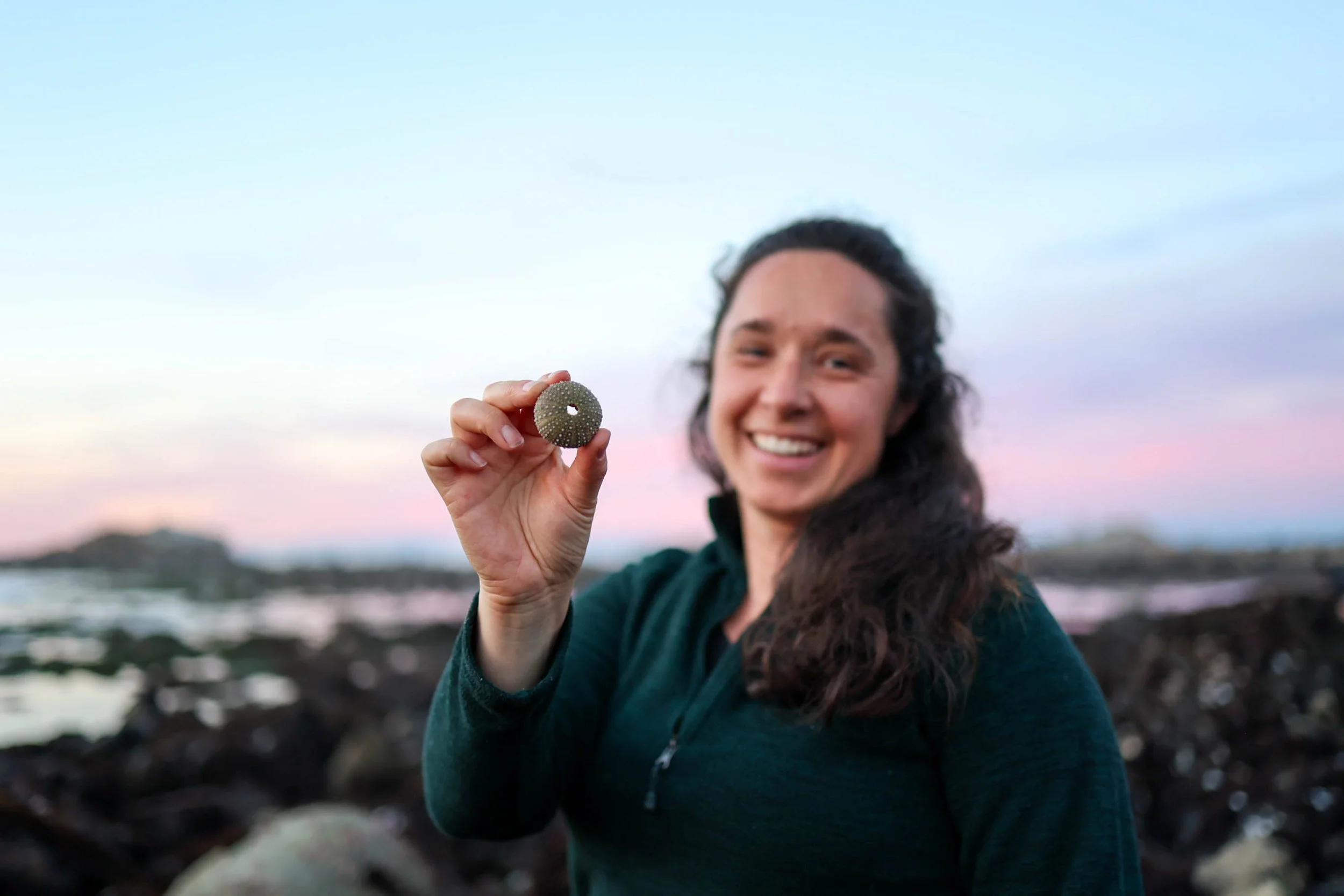
Boat Person on Land: The joy of hanging with Samantha Wishnak.