
When we send the ROVs down to the seafloor 99% of the things we see, even on an individual level, are never going to be seen again.
This is the only time people will see this meter-by-meter portion of the earth.
— Chris Ritter, Remotely Operated Vehicle Team Lead
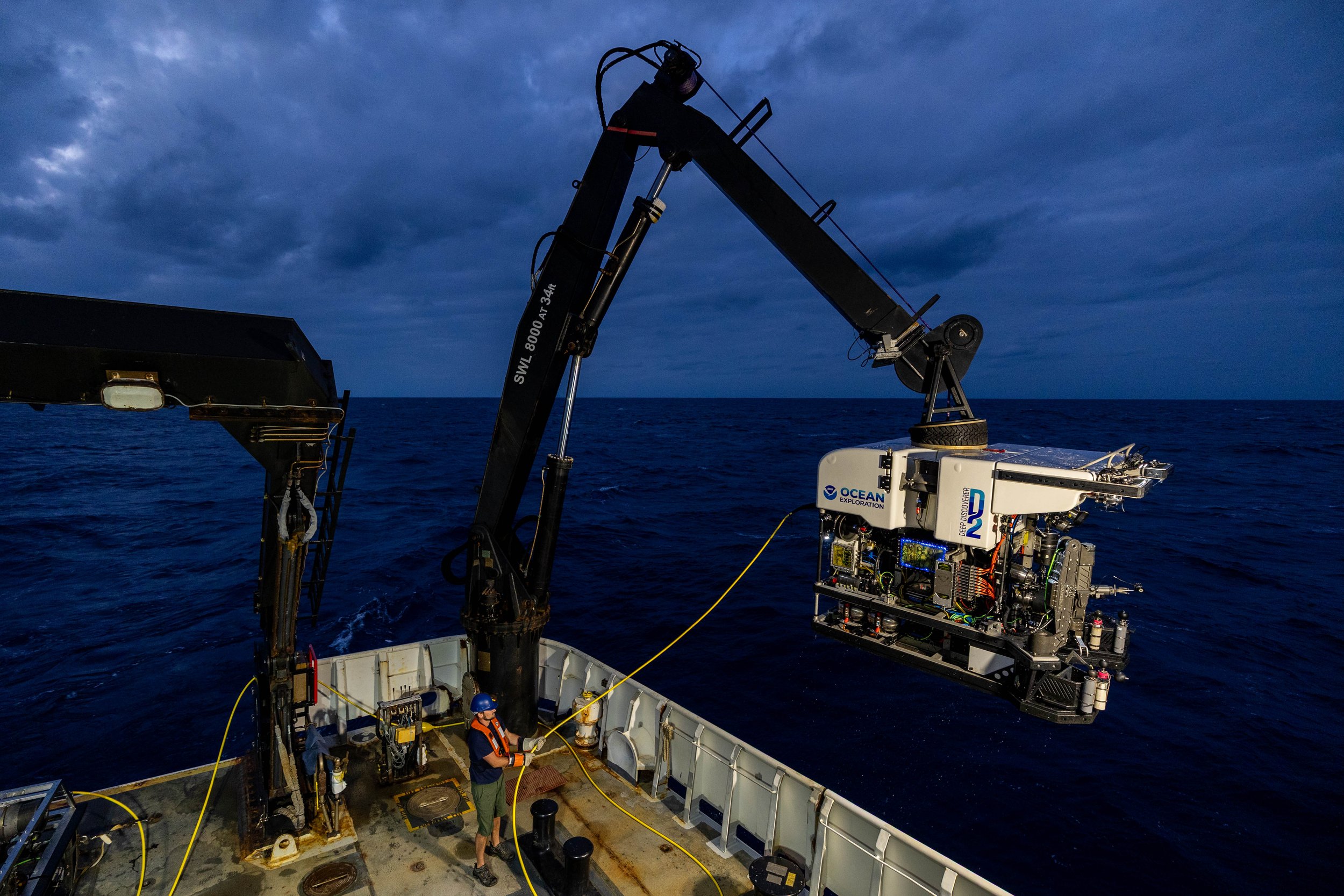
Like clockwork, the five-ton ROV rises smoothly into the air and moves towards the port side of the ship. The moment D2 goes over the railing and lands in the water is one of the most critical — and potentially the most hazardous. A wave could smash the ROV into the side of the ship. Tension on the tether (still on deck) could knock someone overboard.
“At that moment, I’m not worried about anything on the vehicle except thrust ability,” Ritter tells me later. “Once D2 is away from the ship, we can take a breath.”
As usual, the team executes the deployment smoothly. D2 bobs on the surface directly aft of the ship, as Seirios slowly descends from the A-frame. With both vehicles safely in the water, it’s time to go to depth. As they descend, the team in the control room will monitor the ROVs closely, looking for ground faults (indicators of a short or a leak). Once D2 and Seirios pass below 50 meters and all systems are working as they should, the dive is officially a go.
Throughout the morning, I take photos, film a few action shots, and try to stay out of the way. After years of documenting ROV teams on multiple research vessels, I’ve seen these scenes play out before. The pre-dive checks in the hangar, the launch sequence on deck, and the rapt attention in the blue glow of the control room — it’s all familiar.
But I still feel a degree of disbelief. This team may make it look easy, but sending specialized robots over 5,000 meters deep to the seafloor is no small feat.
Read More