
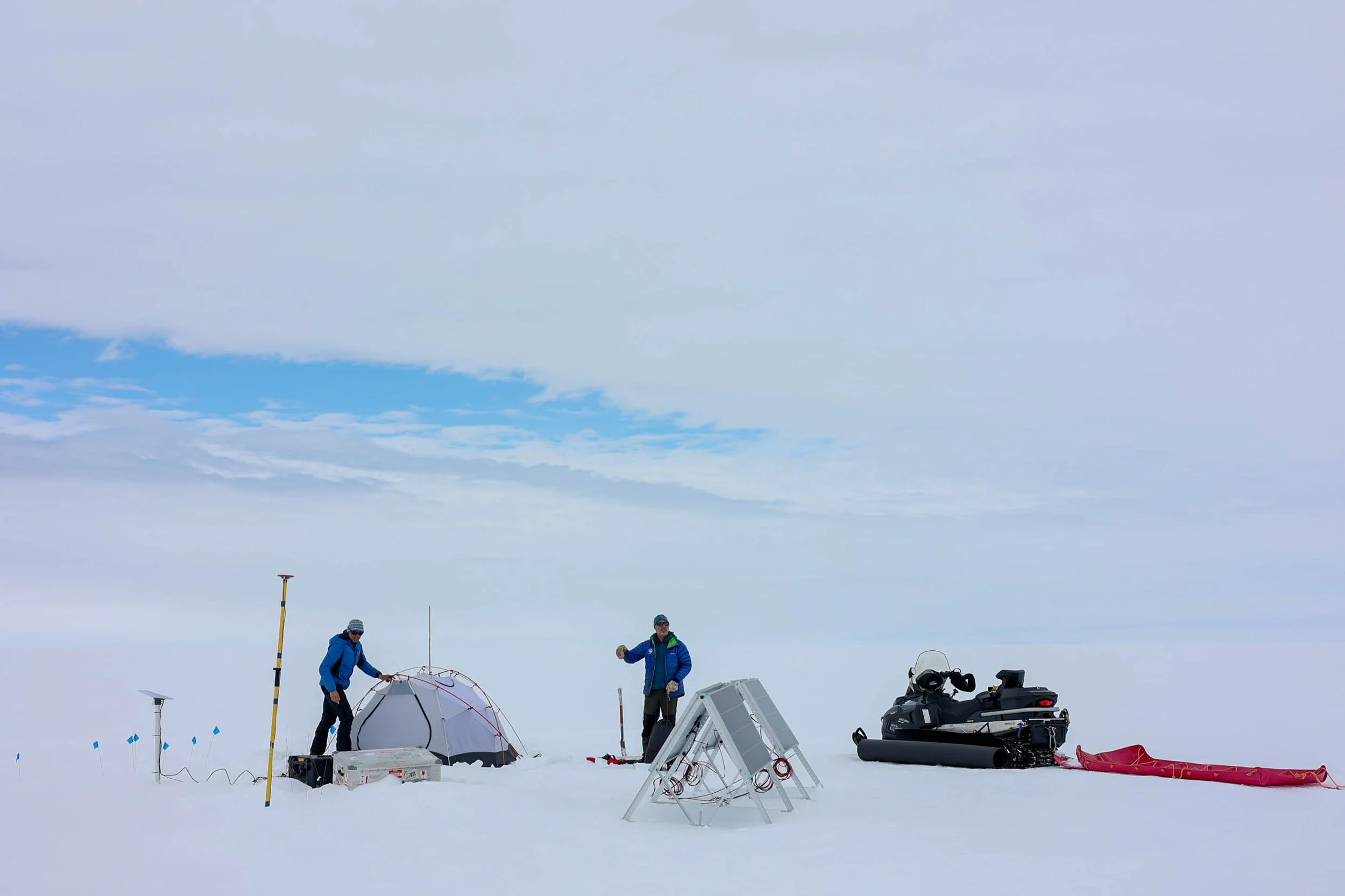
To instill and reinforce expeditionary behavior – essentially, the ability to work in a team productively and cheerfully in tough conditions – astronauts do survival training, on water and land… the specifics of the experiences were different, but the focus was always the same: figuring out how to thrive, not just individually but as a group, when you’re far outside your comfort zone.
— Chris Hadfield, An Astronaut’s Guide to Life on Earth
Often strength blinds us to the benefits of technique or efficiency. We close our eyes and pull, but alpinism rarely rewards raw strength — successful alpinists appear to be those who multiply force with the lever of creativity, confidence, and psychological resilience.
— Mark Twight, Training for the New Alpinism
Even in the most extreme environment, redundant actions can generate a sense of rudimentary routine. After driving the Tucker Sno-Cat roughly a kilometer away from our field camp, Darren McAulay and I climb out of the cab and stand back to observe an engineer and a scientist do their thing: Joel Steinkraus and Zhongwen Zhan are making adjustments to the PEG. Again.
Watching these experts tinker with equipment at the bottom of the world is fascinating — for a little while at least. After 10 minutes of filming and photographing their repetitive movements, my attention drifts to the horizon, towards the Ellsworth mountains. I notice Darren is gazing in that direction too.
Darren is about a decade older than I am, but he has accrued multiple lifetimes worth of experience in alpine environments. While my mountaineering adventures are negligible compared to Darren’s illustrious career, I still recognize the glint in his eyes as he stares at the snow-covered peaks in the distance. It’s easy to see what he’s thinking: I wish I was climbing.
“What’s it like to work down here for so many seasons?” I ask.
Darren exhales a long breath, searching for words to describe an experience that defies definition. “It still blows me away,” he says simply. “There is nothing like this.”
I tell Darren a little bit about my work on research vessels and we chat about the nature of making a living from expeditions: yeah, it’s a dream job but it’s also complicated. The highs are extraordinarily high, while the lows can feel disorienting, or even debilitating at times. It’s an intense lifestyle — after a particularly exhausting or challenging expedition, we may feel pushed past our limits. Over it. Time to throw in the towel.
But the siren song of the wild always reels us back in.
“Each year I think okay that’s it, I’m done,” Darren says. “And then a few months later, when people ask if I’m going back for another season, I say oh yeah, definitely.” He is quiet for a minute, still staring at the mountains as though he could drink them in forever. “It’s such a privilege to be able to come here.”
This is one of my favorite parts of any expedition — peeking into the minds of my teammates, gleaning bits of their wisdom and perspective. The journalist part of my brain percolates with questions about what drives people, why we make certain decisions. Here in Antarctica, I am particularly interested in the unique mentalities my teammates possess. I want to better understand what kind of mindset enables a person to work effectively at the bottom of the world.
Our expedition team comprises three distinct groups: the engineers from NASA, the scientists from Caltech, and the guides from ALE. Some overlap in experience and expertise exists between all of us, but the biggest commonality I observe is a fundamental yearning for challenge. The dinner conversations in our field camp illustrate this character trait over and over again.
I enjoy chatting with Josh Hoeschen about life in the tiny town of Talkeetna and his work at the Alaska Mountaineering School. I ask Pat Saylor a million questions about the different jobs he has worked on Denali. I delight in hearing stories from Darren and Nick about expeditions on Mt. Vinson and other peaks in Antarctica.
I’ve met a few alpine enthusiasts on research vessels over the years, but the conversations don’t always feel so heartening. I’ll never forget chatting with a pompous ROV pilot (while working in the South Pacific last summer) who would not shut up about climbing Everest. He told the story of his summit bid again and again, with a laughable degree of self-righteousness. Our 220-foot ship was far too small for his massive ego.
Fortunately, that’s not the case here. Darren has made dozens of first ascents in Antarctica, and he couldn’t be more humble. Likewise, Nick, Josh, and Pat discuss their experiences with a refreshing degree of candor. They don’t talk down to the mountain climbing rookie (yours truly). Threads of gritty sarcasm and self-deprecating humor weave through our conversations.
“This is what I tell people who want to become mountain guides,” Josh says. “Sure, you love climbing. But when you take the thing you love and make it your job, it changes. You have to deal with other people and it becomes work.”
Josh’s work for ALE extends beyond guiding clients up big mountains. He and Pat work in the Travel Safety Department here, which plays an integral role in everything ALE does.
“It’s not just expeditions,” Josh explains. “Our department covers anything where our aircraft or vehicles are traveling across the land.” He tells me about the job requirements: years of guiding experience, a fundamental understanding of glacier dynamics, the ability to read satellite imagery, and some level of expertise in ground penetrating radar.
“It’s a good mix between doing super nerdy shit and getting out into some of the most dangerous terrain anyone can go to,” Josh says.
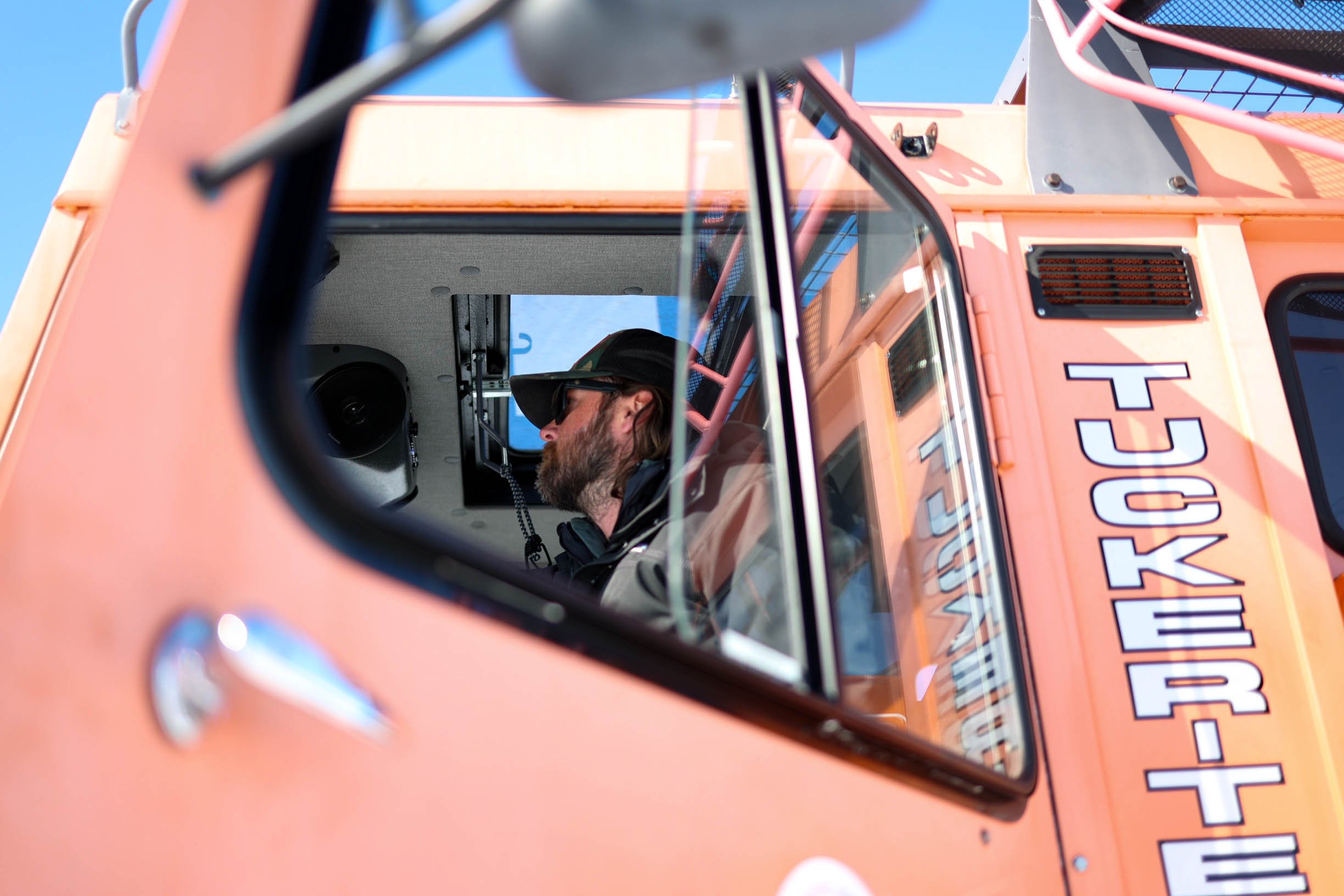
In his element: Josh preps the Sno-Cat for another day in the field.
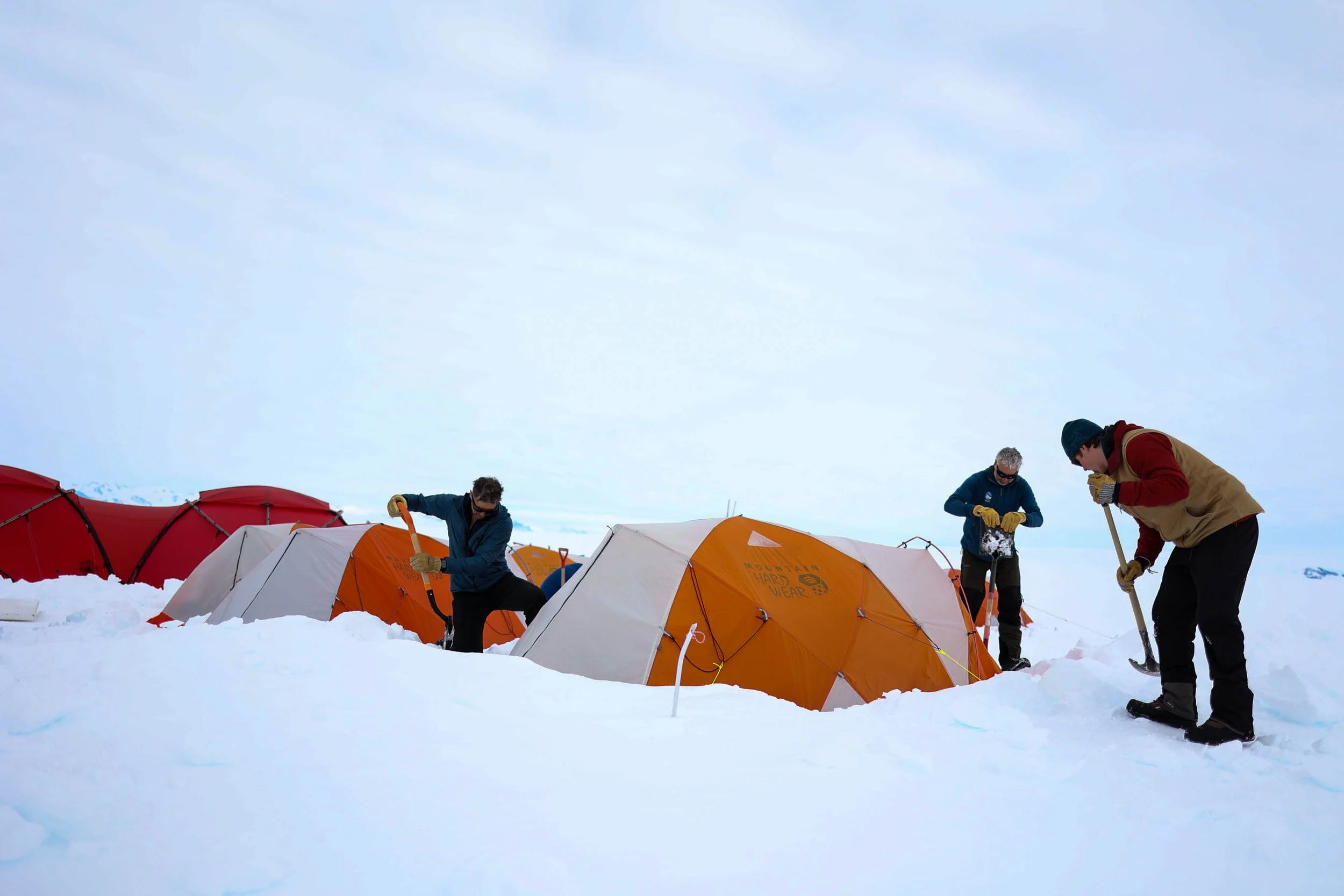
Not here for glory: Nick Lewis, Darren McAulay and Pat Saylor dig tents out of the snow.
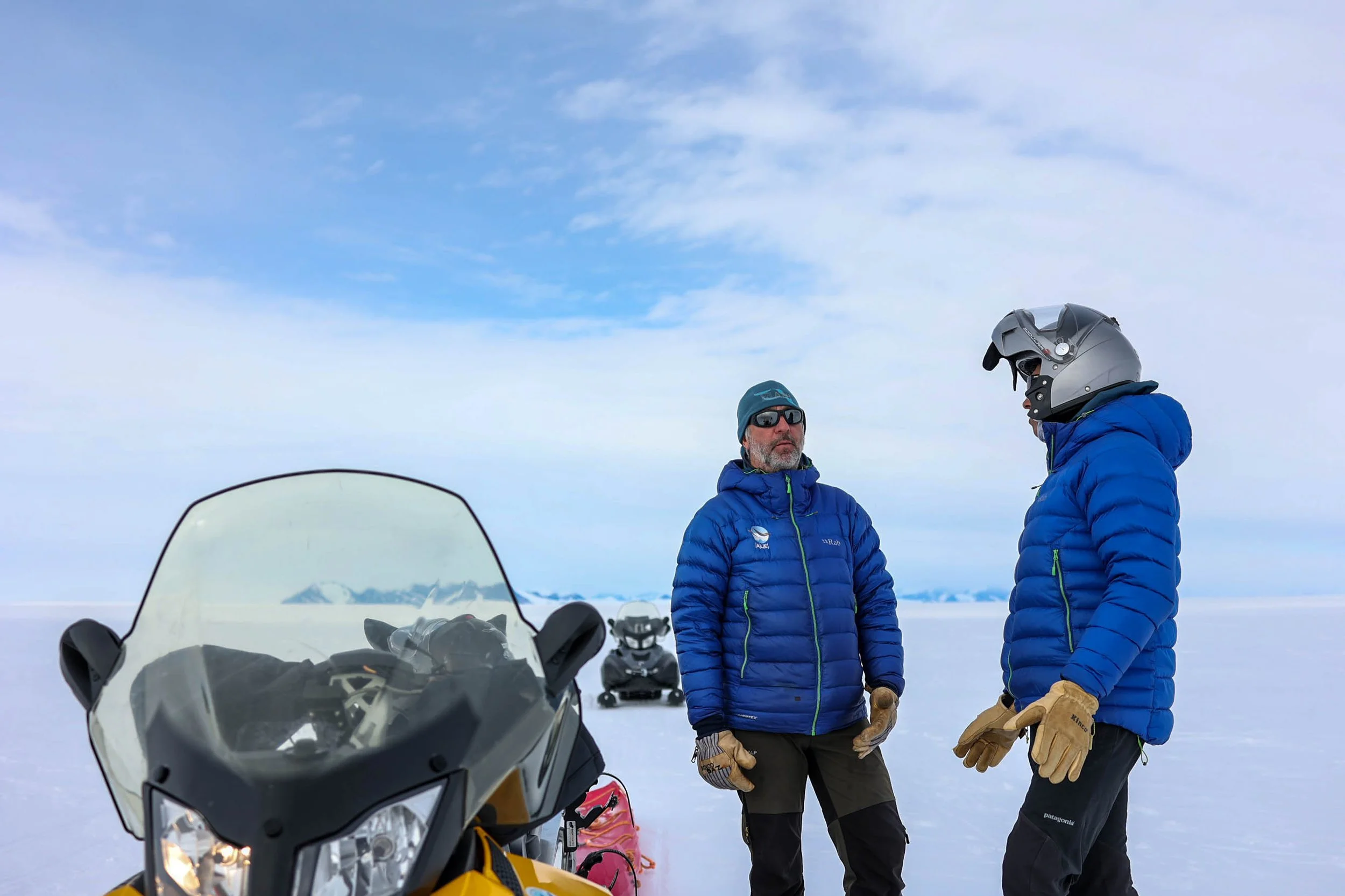
Communication is key: Darren McAulay and Nick Lewis discuss transporting members of the science team.
As we chat, I realize that simply being in a wild place is not enough. Yes, the landscape is mesmerizing, but working in picturesque beauty and ideal conditions does not necessarily generate a meaningful experience. People like Josh need a clear (and ideally difficult) objective — problems to solve, challenges to overcome.
I ask the guys how this project compares to other expeditions they have planned and executed down here. Working with a team of scientists and engineers (and their specialized equipment) is a bit different from what ALE typically facilitates.
“I’ve enjoyed this a lot,” Josh says. “The people in this camp have very different goals from your typical mountaineer… the personalities in the science community are refreshing and a lot more interesting.”
Perhaps the most refreshing personality in our group is Joel Steinkraus. During the short time that I’ve known him, Joel has completely redefined my perception of what it means (or what it looks like) to be a NASA engineer. Boundless enthusiasm. Jovial banter. Constant humor. If we were giving out a Miss Congeniality award, Joel would win. Hands down.
As the Co-Lead of the GLASS project, Joel always has a million things on his plate, but he’s never too busy to sit down and chat with me. After dinner one evening, I ask Joel about the coolest things he has done in his career — besides this trip (his first) to Antarctica.
He immediately starts telling me about working on the Mars Cubsat One (MarCO) project. Launched in 2018, the two twin satellites (roughly the size of briefcases) successfully provided real-time communications when the InSight Lander touched down on Mars. It demonstrated that small, affordable spacecraft could navigate interplanetary space and relay data from the Red Planet.
“It showed that a small, capable team can pull off a Herculean feat,” Joel says. “It stands out as the single most impactful project of my career — not just for gaining experience, but for building lasting relationships. All of my Antarctic and deep ocean work has stemmed from that project.”
One of those lasting relationships is his colleague (and good friend) Andy Klesh. Like Joel, Andy embodies this unique combination: brilliant engineer and charismatic people person. He recognizes the value of creating opportunities and bringing hard-working folks together. Andy is also the reason I’m here and I’m very grateful to know him.
Andy, Joel, and I have had multiple conversations about working with rock-solid, reliable people, but I’m curious about which character attributes they think are most vital. I ask Joel what traits he prioritizes when selecting people for a team.
“I push for passion over knowledge,” he says. “If you’re passionate, that means you’re willing to learn and you’ll figure it out. But if you’re just knowledgable, it’s a job. For most of the things we do, there is no clear academic answer at the onset. No matter how smart you are, you’re not going to know the answer. Being passionate about finding the answer gives you a leg up.”
When I ask Andy about team dynamics, he starts discussing expeditionary behavior — being mindful of how your presence impacts the team and ensuring each person knows their role and their value. Andy mentions that his mountaineering experiences have greatly informed his expedition leadership skills. I want to ask him many more questions on that topic (knowing it could be the subject of another blog post entirely) but for now, we focus on this particular expedition.
“Joel and I have worked together for over a decade, but a lot of the folks here had not worked together before this project,” Andy says. “It’s critical to think about where each person fits within the greater whole.” Andy scans the dining tent, looking around at our teammates. “Down here, no one has been sitting idle or feeling left out.”
Joel nods his head in fervent agreement. “Every single member of this team was essential,” he says. “If we had been forced to cut anyone, it would have been me and Zhongwen.”
I know this sentiment is true because I’ve witnessed it firsthand. During a busy day of field work, space was limited on the snow mobiles — five of us were planning to go out on the ice to install a piece of equipment, but we only had spaces for four people. Without hesitation, Zhongwen Zhan gave up his spot so that I could accompany the team and take photos. That degree of generosity and selflessness is just one of the qualities that has made this expedition so successful and enjoyable.
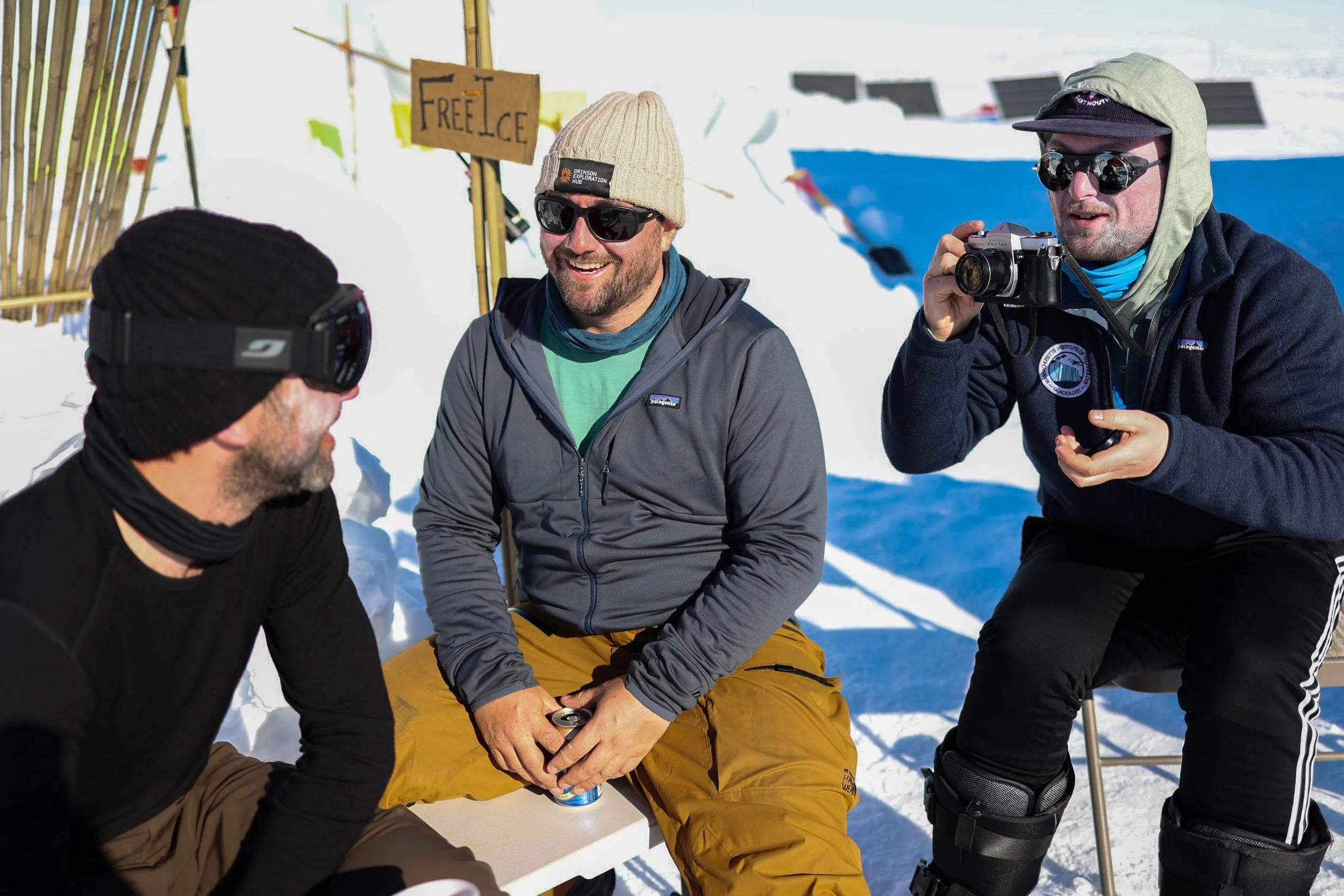
Don’t forget to have fun: After several long days of running 24-hour operations, Joel takes a moment to relax with Andy Klesh and Thatcher Chamberlin.
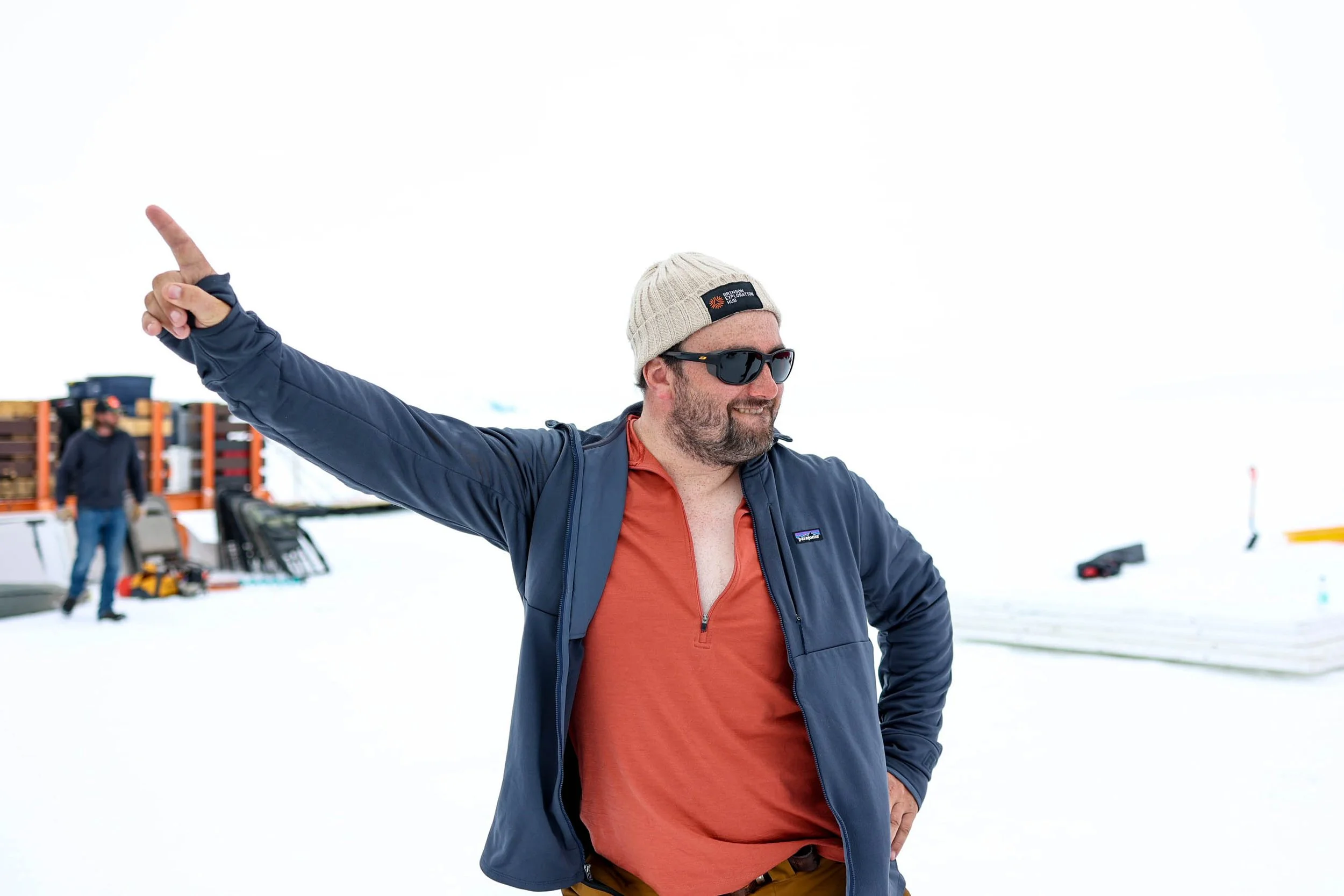
Not your typical engineer: Joel Steinkraus is the embodiment of work hard, play hard.
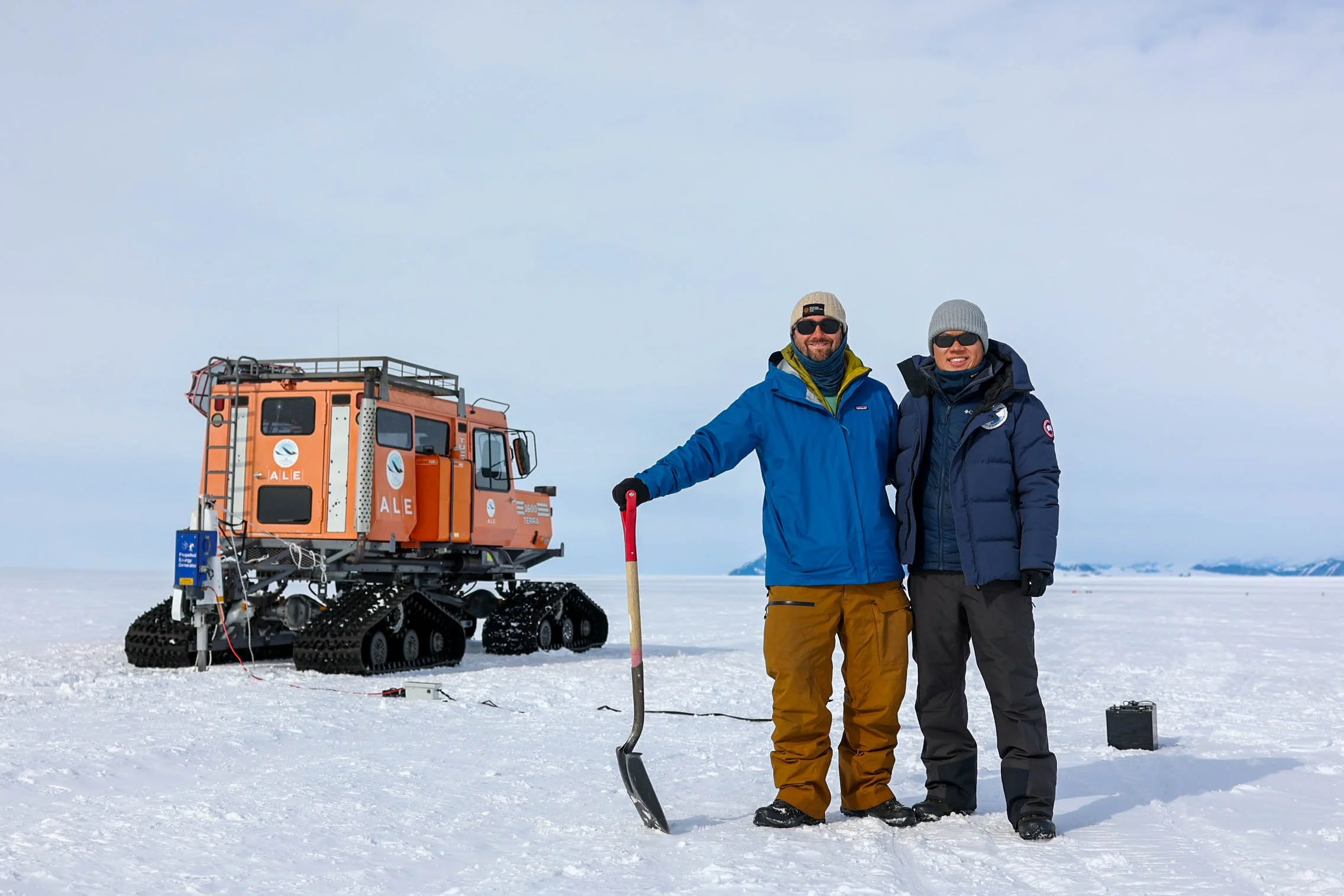
Excellent Leadership: Project Co-Leads Joel Steinkraus and Zhongwen Zhan pose for a photo after the final PEG deployment.
Another day in the field. Another few hours of standing by while the PEG slams into the ice. This time, I’m sitting inside the cab of the Sno-Cat with Chris Lefler. In many ways, Chris is a stereotypical engineer. Inherently humble and always focused on the task at hand. A brainiac and a problem-solver. While he takes pride in his work, Chris would never brag about working for NASA.
But here at the bottom of the world, ensconced in a Sno-Cat with ample time to kill (and with a little prodding from me), Chris opens up about some of the most memorable moments of his career. I ask him how this expedition compares to other projects he has worked on.
“This is definitely the coolest experience — well, besides the Mars helicopter,” Chris says.
Chris was the Deputy Mechanical Lead for the Ingenuity Mars helicopter, which completed 72 historic flights on the Red Planet, as part of the Perseverance rover mission. Chris tells me about flying to Kennedy Space Center to prepare for the launch.
“I was the last person to touch the helicopter before it left the planet,” Chris says with a shy grin. “That was pretty cool — I’ll never forget it.”
When I ask Chris to elaborate on how working on the Mars helicopter compares to working in Antarctica, he emphasizes the differences.
“With the helicopter, we made history. That was a once-in-a-lifetime thing. It’s tough to beat something like that,” he says. “But down here — this is just a great adventure.”
During a typical work day at the NASA Jet Propulsion Lab, Chris spends most of his time in back-to-back meetings. “I’m not a super outdoorsy person,” he says. “I expected this experience to be miserable. No showers. Living in tents. Dealing with extreme weather.”
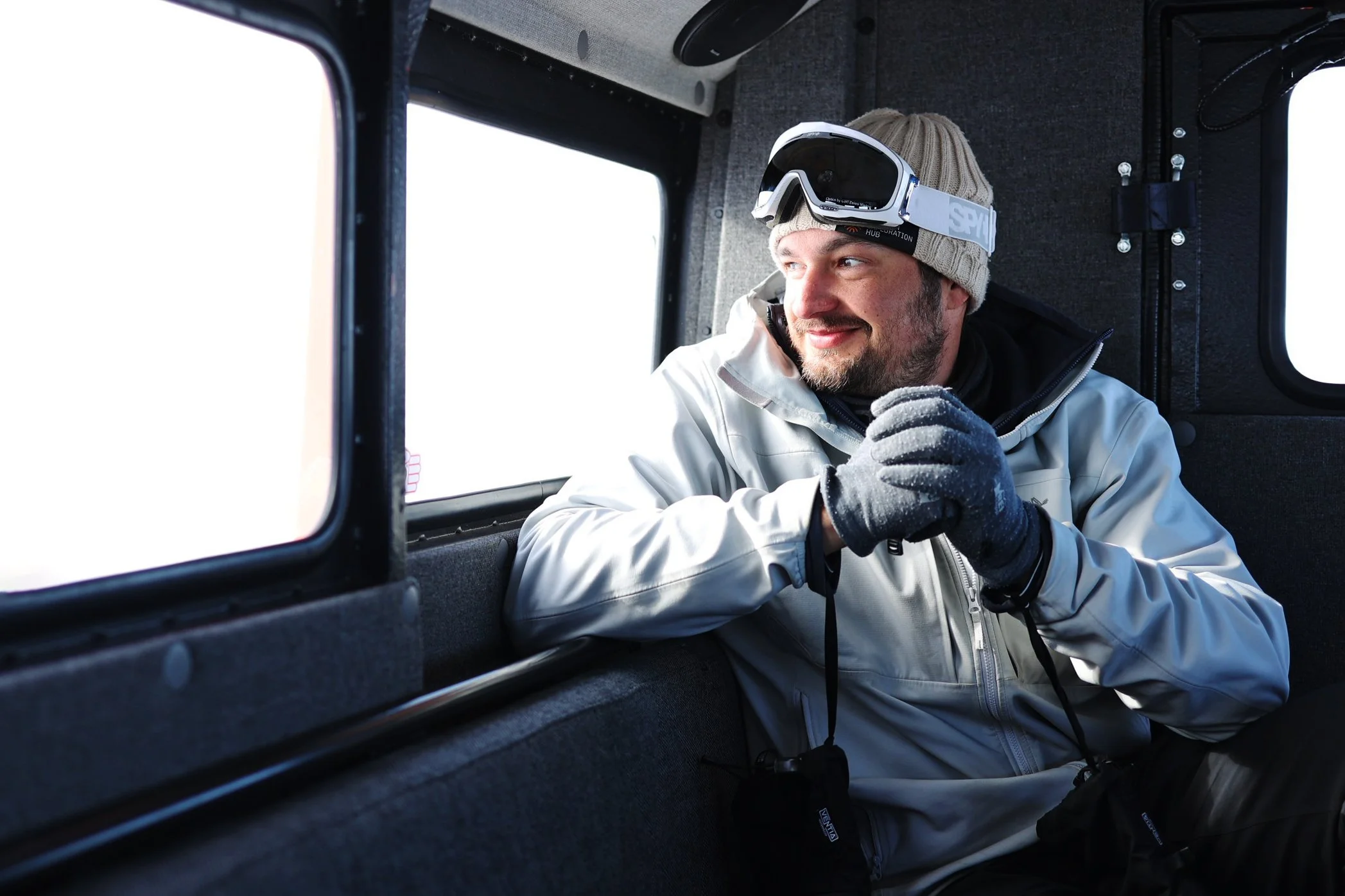
Not outdoorsy: Chris stares at the vast expanse of the Ronne Ice Shelf as he reflects on our time in Antarctica.
I laugh at the thought of a “not outdoorsy” person being forced to camp in a place like Antarctica. I also recall a brief conversation I had with Chris when we were in Punta Arenas. He told me he had brought over 200 wet wipes and he wasn’t sure that was enough.
Chris isn’t complaining or fretting about personal hygiene now though. On the contrary, he looks happy and relaxed.
“This has been such smooth sailing and so much better than I imagined,” he says. “We have catered meals and beautiful weather! It’s like California followed us down here.”
I ask Chris if he would do something like this again. He doesn’t even have to think about the question before responding.
“Absolutely — it’s a breath of fresh air. For the flight projects we work on, there is a lot of rigor and bureaucracy. Doing a project like this is liberating because we don’t have to be so worried about failing. We figure it out as we go.”
During each of my conversations with different members of the team, this mindset has come up again and again. Taking risks. Executing ambitious projects on a rapid timeline. Utilizing creative problem-solving. These values define the organization supporting this expedition, the Brinson Exploration Hub.
As we near the end of the expedition, we all ask each other the same question: where are you heading? What’s the next big adventure?
When I pose this question to Pat, he tells me about some work he has lined up with Airborne Snow Observatories (ASO), evaluating watersheds in Colorado.
“When will you start?" I ask.
“I haven’t decided on a start date yet, it’s fluid,” he says. “I might try to give myself some decompression time after this.”
I nod knowingly. For folks who make a living from high-octane adventures, decompression time is extremely valuable, though not always viable. Pat asks what my next expedition is.
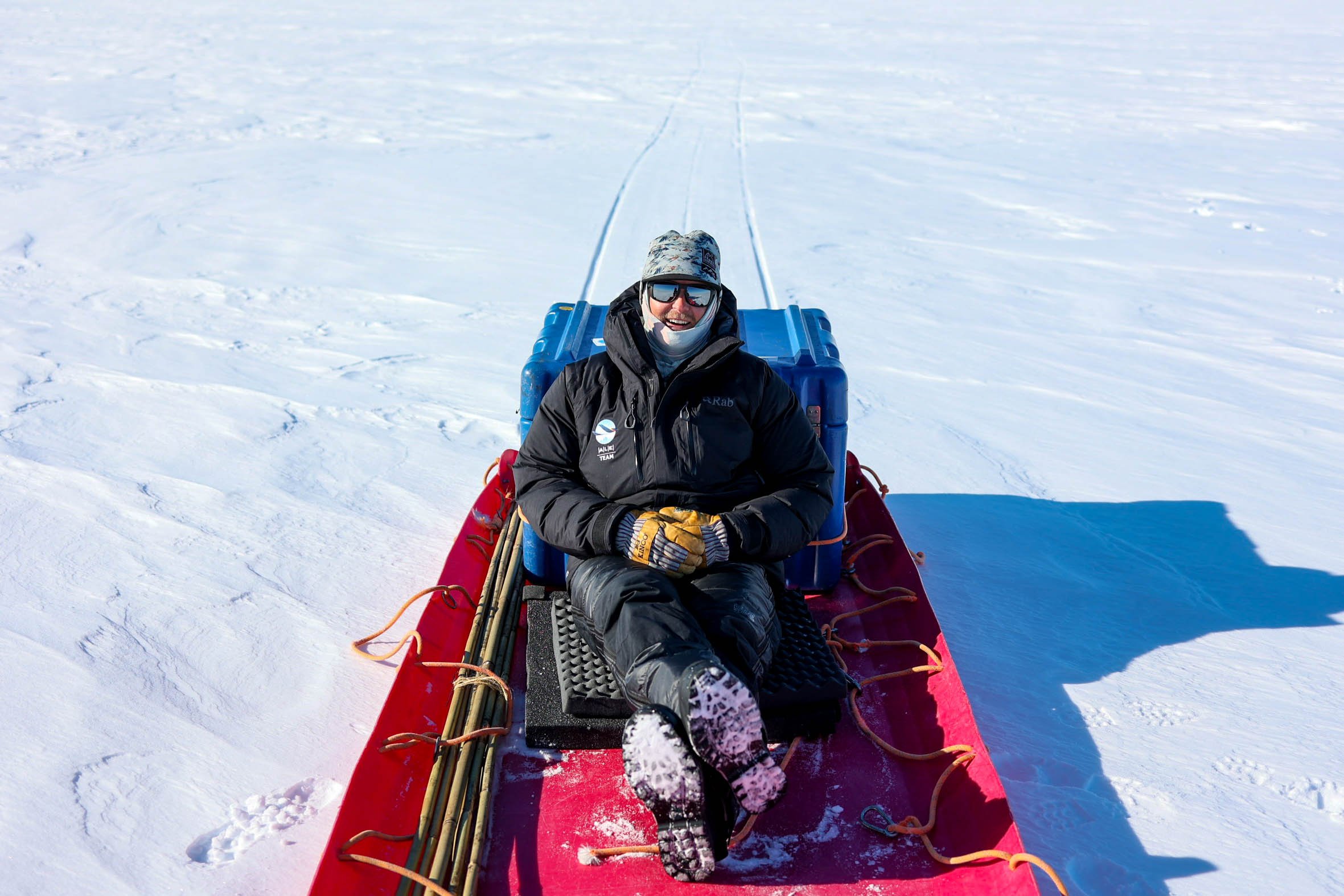
Relaxed and ready for anything: Pat Saylor poses for a quick photo while working on the Ronne Ice Shelf.
“No idea,” I say casually. I explain that summer is my busy season, and I usually start getting emails from different organizations in January or February, inquiring about my availability for the upcoming months.
“What about you? Will you go back to Alaska next summer?”
“We’ll see — I don’t know yet,” Pat says. “But I’m not feeling pressured or stressed about it. I’ve found if the schedule is totally packed, it’s hard to be spontaneous.”
I agree with Pat completely, but it’s taken me many years to harness that mentality. When I started my freelance career (almost a decade ago), I spent a lot of time agonizing over empty spaces in my calendar, anxiously wondering when and how I would book my next gig. I now understand the value of leaving some dates open — it’s how I was able to join this team in Antarctica.
Of all the qualities that professional explorers hold in high regard — passion for the work, experience and expertise, strong relationships, mental resilience — I wonder if we place enough value on this one: the ability to embrace the unknown. Setting ambitious goals and planning epic endeavors are certainly worthy undertakings.
But it’s also beneficial to be open; to cultivate a mindset that allows space for different opportunities and possibilities.
Want to check out more stories from our time in Antarctica? Read about how our journey began here: On the Ice | Part One: Efficiency and On the Ice | Part Two: Delight. Read more details about our field camp here: On the Ice | Part Three: Adaptation
Learn more about our instruments, data collection, and scientific objectives here: GLASS Project | Antarctica Field Notes